<!DOCTYPE html>
Heat Pump Lifespan: How Long Do Heat Pumps Last?
Heat pumps are a significant investment — and understanding how long you can expect yours to last helps you plan for replacement, evaluate repair vs. replacement decisions, and maximize your return on the investment. Heat pumps are electromechanical systems subject to wear on compressors, fans, coils, and electrical components — but with proper maintenance, they typically outlast gas furnaces. Heat pumps last 12-18 years on average, with good maintenance extending life to 15-20 years. Gas furnaces average 15-20 years, meaning a heat pump may need replacement slightly sooner than the furnace it might replace — but heat pumps also avoid the corrosion issues that plague gas furnaces from combustion byproducts.
Factors That Determine Heat Pump Lifespan
Several factors determine how long a specific heat pump will operate effectively:
Factor 1: Build Quality and Brand
Not all heat pumps are built to the same standard. Higher-end brands (Trane, Carrier, Lennox, Mitsubishi, Daikin) use thicker copper tubing in the coils, more robust compressor designs, and better-quality scroll compressors that last longer than the rotary compressors found in budget units. Entry-level units from any brand typically use cheaper components — thinner coil fins, lower-quality refrigerants, and lesser compressor designs — that wear out faster.
Mid-range units from quality manufacturers typically offer the best balance of cost and longevity. Look for models with 10-year compressor warranties as a baseline indicator of manufacturer confidence.
Factor 2: Climate and Usage Patterns
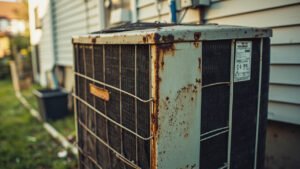
Heat pumps in cold climates work harder than those in mild climates — running longer, cycling more frequently, and defrosting more often. This additional stress accelerates wear on the compressor, fan motor, and reversing valve. Heat pumps in coastal areas face salt air corrosion on outdoor coils, which shortens lifespan. In desert climates, sand and dust accumulation on coils reduces efficiency and increases strain on components.
Heat pumps used as primary heating (rather than supplemental) run nearly continuously during the heating season and wear faster than those used as supplemental systems that only run during mild weather.
Factor 3: Installation Quality
Proper installation is the single largest controllable factor in heat pump longevity. Improper refrigerant charge — either too much or too little — causes the compressor to work harder and fail earlier. Incorrectly sized units (too small or too large) cycle excessively, reducing component life. Poorly secured units transmit vibration to the structure, loosening connections and accelerating wear.
Electrical connections that are not properly torqued create resistance and heat that can damage components over time. Drain lines that are not properly sloped cause water to back up and potentially damage the air handler. Quality installation practices prevent these issues before they start.
Factor 4: Maintenance History
Heat pumps that receive regular annual maintenance consistently outlast those that run without service. Annual maintenance includes: cleaning or replacing air filters (monthly or quarterly), cleaning the outdoor coil, checking and tightening electrical connections, checking refrigerant charge and connections, lubricating fan and blower motors, and inspecting the defrost cycle and reversing valve operation.
Homeowners can perform monthly filter changes and outdoor coil cleaning with a garden hose. Professional service should include refrigerant pressure checks, electrical testing, and comprehensive component inspection. Learn about annual heating maintenance
Component Lifespan: When Each Part Typically Fails
The Compressor (12-18 years)
The scroll compressor is the heart of the heat pump and typically the most expensive component to replace — $800-$1,800 for parts and labor. Compressor failure is usually preceded by warning signs: unusual noises (grinding, clicking, chattering), the compressor struggling to start, or the unit drawing higher than normal amperage. Once a compressor fails, replacement is usually recommended over repair, particularly if the heat pump is over 10 years old.
Compressor failures are often caused by: refrigerant issues (undercharge or overcharge), electrical problems (voltage imbalance, power surges), overheating (from restricted airflow or dirty coils), or simply age-related wear on moving parts.
The Reversing Valve (12-18 years)
The reversing valve controls the flow of refrigerant to switch between heating and cooling modes. It is a solenoid-operated valve that can stick, fail to shift fully, or develop internal leaks. Reversing valve problems typically manifest as the system running but producing no heating (or no cooling), or a noticeable temperature difference between modes. Learn about heat pump defrost cycle problems
Reversing valve replacement typically costs $300-$600 for the valve plus $200-$400 in labor. If the heat pump is over 12 years old and the compressor is original, the repair may not be worth the cost.
The Fan Motor (8-15 years)
The outdoor fan motor that blows air across the coil runs thousands of hours per year and is subject to bearing wear, winding failure, and blade damage from debris. A failing fan motor typically produces grinding or screeching noises before failing completely. Fan motor replacement typically costs $250-$500 for the motor plus $150-$300 labor.
The Air Handler Blower Motor (12-20 years)
The indoor blower motor that pushes heated air through ductwork typically outlasts the outdoor fan motor because it runs in a cleaner environment. Blower motor failures typically manifest as reduced airflow, unusual squealing or grinding noises, or a complete failure to blow air. Variable-speed blower motors (common in modern systems) are more complex and expensive to replace than single-speed motors, but they last longer and operate more efficiently.
The Defrost Board (8-12 years)
The defrost board manages the defrost cycle timing and is subject to electrical and environmental stress. A failing defrost board causes the heat pump to either never defrost (resulting in ice buildup that restricts airflow and reduces efficiency) or constantly cycle through defrost (resulting in cold air being blown into the home). Defrost board replacement costs $50-$150 for the part plus $150-$250 labor.
Coils (15-25 years)
The outdoor and indoor coils are copper tubes with aluminum fins that transfer heat. Coils can develop leaks from corrosion (particularly in coastal or industrial environments), physical damage, or manufacturing defects. A leaking coil requires professional repair and often replacement. Coil replacement costs $600-$1,200 for the coil plus $200-$400 labor per coil — and may not be economical on an older unit.
Heat Pump Age: When Replacement Makes More Sense Than Repair
Replace the heat pump rather than repair it when:
- The unit is over 14-16 years old and the repair cost exceeds $800
- The compressor fails on a unit over 12 years old
- Multiple components are failing simultaneously (sign of systemic age-related wear)
- The unit uses R-22 refrigerant (phased out in 2020; recharging costs $1,500-$3,000 and rising)
- Repair costs total more than 50% of replacement cost
Repair may be worth it when:
- The unit is under 10 years old and the repair cost is under $500
- A single component (defrost board, fan motor, reversing valve) has failed
- Annual maintenance has been performed consistently
Extending Your Heat Pump’s Lifespan
These maintenance steps can add 3-5 years to your heat pump’s useful life:
- Replace or clean air filters monthly during heating season — the most impactful maintenance task
- Keep the outdoor unit clear of debris, vegetation, and snow accumulation (maintain 24-inch clearance)
- Hose down the outdoor coil once per year (or more in dusty or coastal environments) to remove buildup
- Schedule annual professional service before each heating season
- Use a programmable or smart thermostat to reduce unnecessary cycling
- Avoid setting the thermostat to emergency heat mode unless actually needed — it causes the heat pump to run inefficiently
- Check and clean the indoor evaporator coil annually if accessible
- Verify the condensate drain is clear and draining properly
Heat Pump Lifespan FAQ
How long does a heat pump last compared to a gas furnace?
A heat pump lasts 12-18 years on average (up to 15-20 with excellent maintenance), while a gas furnace lasts 15-20 years. Heat pumps have a slightly shorter average lifespan because they run year-round in both heating and cooling modes, while gas furnaces only run during heating season. However, gas furnaces suffer from combustion-related corrosion that heat pumps do not experience.
Should I replace a 15-year-old heat pump?
If the heat pump is 15 years old and showing signs of declining performance (higher energy bills, uneven heating, unusual noises), replacement is likely the better long-term financial decision. New heat pumps are 20-40% more efficient than units from 15 years ago, and the efficiency improvement pays for a significant portion of replacement cost over 7-12 years. Learn about heat pump emergency heat
What are signs a heat pump is failing?
Signs of heat pump failure include: the unit running constantly without reaching the set temperature, ice buildup on the outdoor coil that does not clear, unusual grinding or clicking noises from the outdoor unit, warm air not being produced even when the unit is running, and higher than normal electricity bills without corresponding heating improvement. Any of these signs warrants a professional inspection.
Is it worth replacing just the compressor on an older heat pump?
Replacing the compressor alone (at $800-$1,800 for parts and labor) is generally only worth it if the heat pump is under 8 years old, has received excellent maintenance, and no other components show signs of age-related wear. If the heat pump is over 12 years old, the likelihood of another component failing soon is high, and full replacement is typically more economical.
Do newer heat pumps last longer than older models?
Modern heat pumps (last 10 years) benefit from improved scroll compressor technology, better coil designs, variable-speed motors that reduce wear, and more sophisticated control electronics. These improvements suggest newer units may last longer than the 12-18 year average — but since the oldest current models are only about 15 years old, we do not yet have long-term data on the newest generation.