<!DOCTYPE html>
Boilers vs Heat Pumps: Which Heating System Is Right for You?
The choice between a boiler and a heat pump is a foundational decision in home heating — it determines your energy source, your monthly operating costs, how your home heats, and your environmental impact for the next 15-25 years. Understanding different heating system types helps you make an informed comparison. Boilers burn natural gas, propane, or heating oil to heat water and distribute warmth through radiators or radiant floor circuits. Heat pumps use electricity to move existing heat from outdoors to indoors through a refrigeration cycle. Heat pumps produce 2-4x more heat per dollar of energy consumed, but boilers have lower installation costs and provide faster heat-up in very cold climates.
How Boiler Heating Works
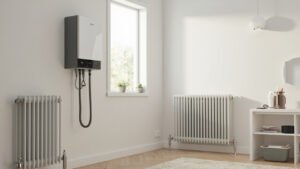
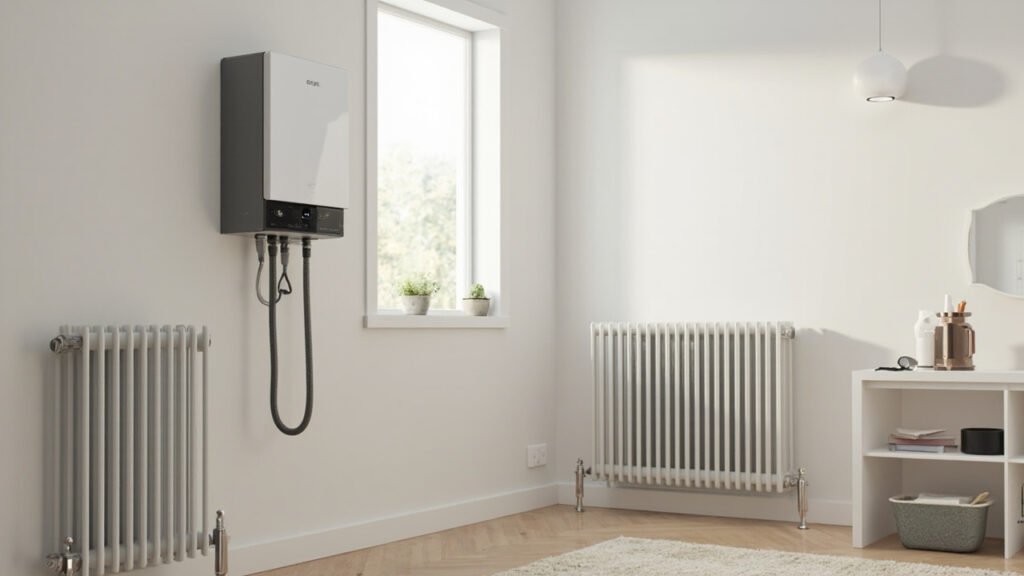
A boiler heats water to temperatures typically between 140-180 deg F (conventional boilers) or 85-140 deg F (condensing boilers). The heated water circulates through pipes to heat emitters — either traditional radiators, baseboard convectors, or radiant floor tubing. As the heated surfaces radiate and convect warmth into rooms, the water cools and returns to the boiler for reheating in a continuous loop.
Boilers are one of the oldest and most proven heating technologies in residential use. Modern condensing boilers achieve 90-98% efficiency by extracting heat from exhaust gases that would otherwise be wasted — making them significantly more efficient than older non-condensing boilers at 80-90% efficiency. Learn about boiler replacement costs and efficiency ratings
Types of Boilers
- Conventional (non-condensing) boiler: Burns fuel to heat water, expels combustion gases through a flue. 80-90% efficient. Typically used in older homes with existing boiler infrastructure. Less expensive to install than condensing boilers.
- Condensing boiler: Extracts heat from combustion gases by condensing water vapor in the exhaust. 90-98% efficient. Requires回流 condensate drain and stainless steel heat exchanger. More expensive to install but significantly lower operating costs.
- Combi (combination) boiler: Provides space heating and domestic hot water from a single unit. No storage tank for hot water. Compact for homes with limited space. Best for small-to-medium homes with modest hot water demand.
- System boiler: Stores hot water in a cylinder but draws directly from the mains water supply. Suitable for larger homes with higher hot water demand. Does not require a feed-and-expansion tank in the loft.
Boiler Heat Emitters
- Cast iron radiators: Traditional radiators that heat a room through a combination of radiation and convection. High thermal mass holds heat well after the boiler shuts off. Slow to respond to temperature changes.
- Aluminum panel radiators: Lighter and faster-responding than cast iron. More modern aesthetic. Good heat output per square foot of installed space.
- Baseboard convectors: Long, low-profile units typically installed along exterior walls beneath windows. Work by heating air that rises through convection. Effective in well-insulated homes.
- Radiant floor heating: Hot water (typically 85-120 deg F for radiant floor) circulates through tubing embedded in or beneath the floor. Extremely comfortable heat. Learn about boiler and radiant heat combinations
How Heat Pumps Work
A heat pump uses a refrigeration cycle to move heat from one location to another. In heating mode, it extracts heat from outdoor air (or the ground or groundwater) and moves it into your home. It does not generate heat through combustion — it moves existing heat, which is why it can produce 2-4 units of heat for every 1 unit of electricity consumed.
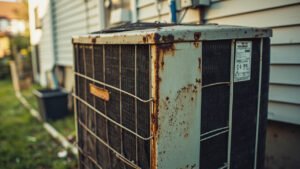
The key components of a heat pump are: the outdoor coil (evaporator), which absorbs heat from outdoor air; the compressor, which compresses refrigerant and raises its temperature; the reversing valve, which switches between heating and cooling modes; and the indoor coil (condenser), which releases heat into your home’s air or water.
Types of Heat Pumps
- Air-source heat pump: Extracts heat from outdoor air. Most common type for residential use. Operating range extends to -15 deg F to -25 deg F for cold-climate models.
- Ground-source (geothermal) heat pump: Extracts heat from the ground through buried loops. More expensive to install but significantly more efficient year-round. Ground temperature stays stable at 45-60 deg F year-round, providing consistent efficiency.
- Water-source heat pump: Extracts heat from a water source (lake, pond, well). Requires an appropriate water source. Not common in residential applications.
- Ductless (mini-split) heat pump: No ductwork required. Individual indoor units mounted on walls or ceilings connected to an outdoor unit. Good for homes without existing ductwork or with zoning needs.
Heat Pump Heat Distribution
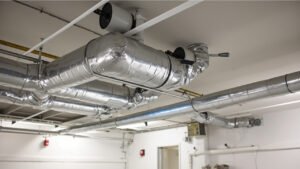
- Ducted air: Heat pump heats air and distributes through ductwork — similar to a conventional forced air system
- Hydronic (water-based): Heat pump heats water that circulates to radiators, baseboard heaters, or radiant floor heat. Heat pumps for hydronic heating are particularly efficient when paired with radiant floor heat
- Ductless air: Individual units blow heated air directly into rooms — no ductwork needed
Comparing Operating Costs
Heat pumps are significantly more efficient to operate than boilers — producing 2-4 units of heat per unit of electricity consumed, compared to a gas boiler that converts 90-98% of fuel energy to heat. In terms of actual operating cost:
- A modern heat pump in a cold climate typically costs $0.08-$0.15 per kilowatt-hour of heat produced
- A natural gas boiler in the same climate costs $0.06-$0.12 per kilowatt-hour equivalent of heat produced (depending on gas rates)
- Heating oil and propane boilers are the most expensive at $0.10-$0.20+ per kilowatt-hour equivalent
The operating cost comparison depends heavily on local utility rates and climate. In regions with cheap natural gas ($0.50-$0.80 per therm), gas boilers may have a slight operating cost advantage. In regions with expensive gas or where heat pump efficiency incentives exist, heat pumps often win on operating cost.
For a typical 2,000 sq ft home in a moderate climate:
- Heat pump heating cost: $900-$1,500/year
- Natural gas boiler cost: $800-$1,400/year
- Propane boiler cost: $1,800-$3,200/year
- Heating oil boiler cost: $1,500-$2,700/year
Installation Cost Comparison
Boilers typically have lower installation costs than heat pumps, especially when retrofitting an existing home with a gas or oil boiler infrastructure.
- Gas or oil boiler replacement: $4,000-$10,000 fully installed (depending on boiler type and complexity)
- Heat pump replacement: $6,000-$14,000 fully installed (air-source; ground-source is $15,000-$40,000)
- Installing new gas service or gas line for a boiler: $0-$3,000 depending on distance and utility requirements
- Installing new electrical service for a heat pump: $0-$2,000 depending on existing panel capacity
When replacing an existing boiler in a home that already has gas service and hydronic distribution (radiators or radiant floor), boiler installation is significantly less expensive. When building new or replacing both heating and cooling systems, the cost gap narrows — a central air conditioning system adds $3,000-$7,000 to a boiler installation, while a heat pump provides both heating and cooling from a single unit.
Heat Pump vs Boiler: Which Should You Choose?
Choose a boiler if:
- You already have hydronic heating (radiators or radiant floor) and gas service
- You live in a very cold climate where heat pump efficiency drops significantly
- You want lower installation costs and do not need air conditioning
- You want fast heat-up response from a system with high thermal mass
- You have a dual-fuel option (gas + backup) and want the security of gas backup in extended cold snaps
Choose a heat pump if:
- You want the most efficient heating technology available
- You are building new or replacing both heating and air conditioning
- You want to eliminate combustion from your home (no CO risk, no gas lines)
- You are eligible for heat pump installation incentives (federal tax credits cover 30% of installation cost; many states offer additional rebates)
- You want to reduce your carbon footprint and can pair the heat pump with renewable electricity
- You are pairing with radiant floor heating and want the most efficient radiant heat source possible (heat pumps produce lower water temperatures more efficiently than boilers)
Boilers vs Heat Pumps FAQ
Is a heat pump more efficient than a boiler?
Yes — heat pumps produce 2-4 units of heat for every 1 unit of electricity consumed, making them 200-400% efficient. A high-efficiency condensing boiler converts 90-98% of fuel energy to heat. On a per-BTU basis, heat pumps cost less to operate in most markets because they move heat rather than generate it. However, the actual cost comparison depends on your local electricity and gas rates.
Can a heat pump replace a boiler?
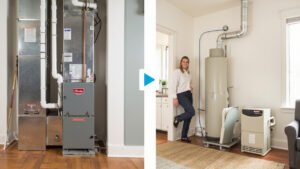
Yes — a heat pump can replace a boiler in most homes. For hydronic heating systems (radiators or radiant floor), a water-to-water heat pump can replace a boiler, heating water to 85-140 deg F and distributing it through the existing piping. For forced-air systems, an air-source heat pump with ductwork replaces the boiler and distributes warm air through existing ducts. Conversion requires removing or decommissioning the boiler and installing the heat pump outdoor and indoor units.
Which lasts longer, a boiler or a heat pump?
A properly maintained boiler lasts 15-25 years, while a heat pump lasts 12-18 years on average. Gas boilers tend to outlast heat pumps because they do not have an outdoor coil subject to corrosion, a compressor subject to wear, or seasonal defrost cycles. However, boiler lifespans depend heavily on water quality and maintenance — hard water or neglected maintenance can shorten boiler life significantly.
Are heat pumps noisy?
Heat pumps produce some noise — primarily from the outdoor fan and compressor. Modern heat pumps typically produce 45-60 decibels during normal operation (comparable to a normal conversation). Some people find the sound noticeable, particularly if the outdoor unit is placed near a bedroom window. Learn about heat pump noise reduction
Do heat pumps work in very cold climates?
Modern cold-climate heat pumps operate efficiently at temperatures down to -15 deg F to -25 deg F, and specialty models work to -40 deg F. In very cold climates, heat pump efficiency decreases as outdoor temperature drops — but even at 0 deg F, a cold-climate heat pump produces 2-3x more heat per dollar than electric resistance heating. In extended cold snaps below -10 deg F, some homeowners supplement with a gas or electric backup system (dual-fuel setup).