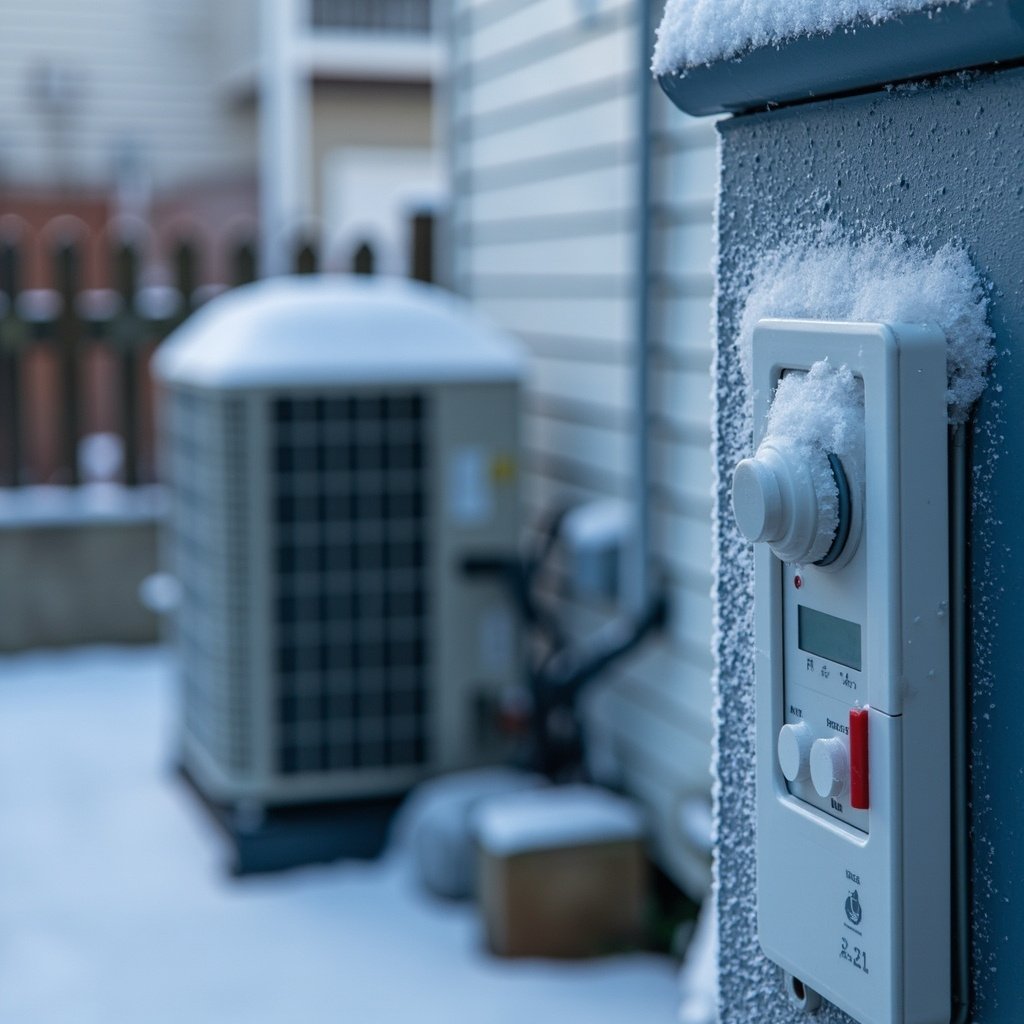
Heat pump emergency heat is a supplemental heating mode that bypasses the heat pump’s standard refrigeration cycle and uses electric resistance heating elements to warm your home. Learn how heat pumps work → Heat pump emergency heat activates automatically when the outdoor unit fails, defrosts, or when outdoor temperatures fall below the heat pump’s effective operating range — typically below 25–40°F depending on the model. Using emergency heat manually when the heat pump is functioning normally will cost significantly more and wear out the backup heating elements faster.
What Is Emergency Heat Mode on a Heat Pump?
Emergency heat mode on a heat pump is a supplemental heating setting that disables the heat pump’s refrigeration cycle and activates electric resistance heating elements instead. The electric resistance elements (also called strip heaters) are backup heating coils that mimic electric furnace heating — they convert electrical energy directly into heat at a 1:1 ratio (1 kWh of electricity produces 1 kWh of heat).
In normal operation, a heat pump moves thermal energy from outdoors to indoors, delivering 2–4 kWh of heat per 1 kWh of electricity depending on outdoor temperature and unit efficiency. Emergency heat mode abandons that efficiency and relies entirely on electric resistance — which costs 2–4 times more per BTU of heat delivered.
The emergency heat setting exists for two scenarios:
- Automatic activation — when the heat pump’s control board detects a fault (compressor failure, refrigerant issues, sensor failure) and switches to backup heat to maintain indoor temperature
- Manual activation — when the homeowner deliberately switches the thermostat to “emergency heat” mode
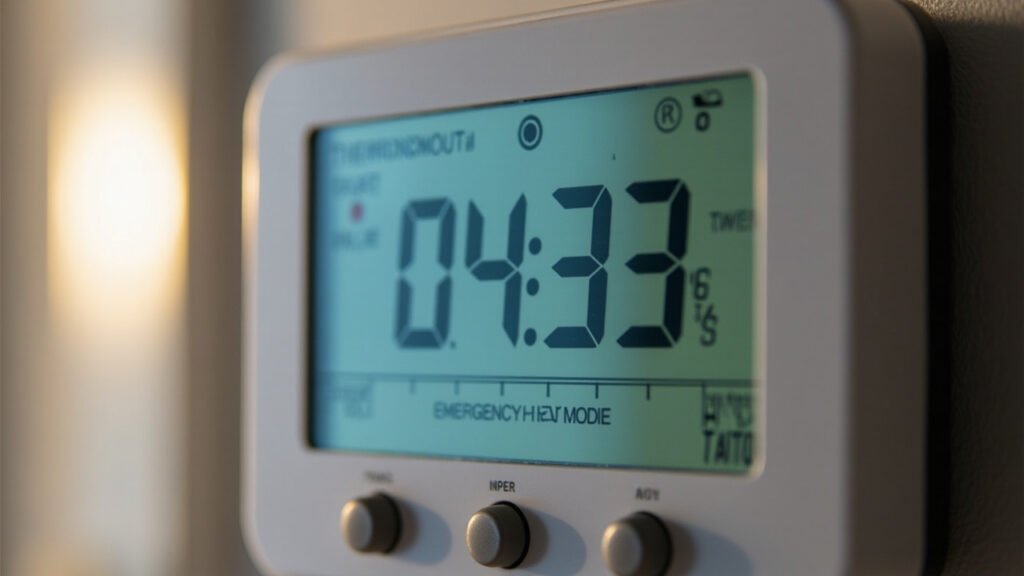
What the Thermostat Display Actually Means
Most programmable thermostats display three heating-related settings:
- Heat: Normal heat pump operation — uses the refrigeration cycle
- Aux Heat / Auxiliary Heat: Automatically activates when the heat pump needs help meeting the thermostat’s temperature demand in cold weather (not the same as emergency heat)
- Emergency Heat / E Heat: Manually selected mode that disables the heat pump entirely and runs only the electric resistance strips
The “aux heat” setting is normal and expected in cold weather. The “emergency heat” setting is for actual emergencies or when the outdoor unit must be completely shut down.
When Should You Use Emergency Heat on a Heat Pump?
Use emergency heat when your heat pump’s outdoor unit has stopped working entirely — due to mechanical failure, a tripped breaker, or a defrost cycle that won’t end — or when indoor temperature is dropping dangerously while you wait for a service technician. Do not use emergency heat as a routine preference when the heat pump is functioning normally, as it dramatically increases heating costs.
Legitimate Emergency Heat Scenarios
- Compressor failure: The heat pump stops cycling but the indoor air handler and blowers still work. Emergency heat provides backup heat while you schedule repairs.
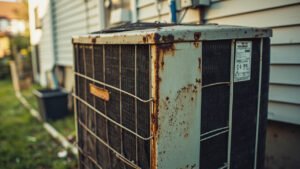
- Outdoor unit is frozen or covered in ice: If the coil is encased in ice and the defrost cycle isn’t resolving it, emergency heat keeps you warm until you can clear the unit or get service. Learn about heating system ice and freeze issues →
- Refrigerant leak: A heat pump with low refrigerant loses efficiency rapidly and may not heat adequately. Emergency heat compensates.
- Control board or sensor failure: Electronics fail. If the heat pump isn’t responding to the thermostat, emergency heat provides an immediate workaround.
- Power to the outdoor unit is lost: A tripped disconnect, blown fuse, or circuit breaker will stop the heat pump. Emergency heat runs without the outdoor unit.
- During a service call: A technician may ask you to switch to emergency heat temporarily to isolate a problem or test components.
When NOT to Use Emergency Heat
- Routine cold weather: If the outdoor temperature has dropped and the heat pump is running but the auxiliary heat elements are cycling on to help meet demand — that is normal. You do not need to switch to emergency heat.
- Slightly lower than expected indoor temperatures: Heat pumps are designed to heat homes in cold weather. The “aux heat” mode handles cold snaps. Only switch to emergency heat if the heat pump isn’t producing any heat at all.
- To feel “warmer” faster: Emergency heat does not heat your home faster. It simply uses a different heat source that costs more per BTU. The heat pump running normally is always the more cost-effective choice.
- When the heat pump has recovered: If the fault has been resolved and the heat pump is running normally again, switch back to normal heat mode to restore efficiency.
How Much Does Emergency Heat Cost to Run?
Emergency heat costs 2–4 times more to run than normal heat pump operation, depending on your electricity rate and the outdoor temperature. Running emergency heat for 8 hours in a typical 2,000 sq ft home can cost $15–$40 depending on the home’s insulation, thermostat setting, and local electricity rates.
Electric Resistance vs. Heat Pump Efficiency Comparison
Under normal heat pump operation at 30°F outdoor temperature, a high-efficiency heat pump delivers approximately 2.5 COP — meaning 2.5 kWh of heat per 1 kWh of electricity. At an electricity rate of $0.14 per kWh, the cost per 100,000 BTU of heat is roughly $4.10.
Under emergency heat (electric resistance) at the same electricity rate, the heat pump is disabled and only the strip heaters run at 1.0 COP — 1 kWh of electricity produces 1 kWh of heat. The cost per 100,000 BTU rises to roughly $10.25 — two and a half times higher.
At 0°F outdoor temperature, where the heat pump’s COP may have dropped to 1.5, the difference narrows but emergency heat still costs roughly $2–3 more per 100,000 BTU than the heat pump running normally.
Estimating Your Emergency Heat Cost
To estimate the cost of running emergency heat in your home:
- Find your electricity rate (per kWh) on your utility bill
- Identify your heat pump’s wattage draw during resistance heating (typically 5–15 kW for a residential system — check the spec sheet or the data plate on the outdoor unit)
- Multiply watts × hours × electricity rate
Example: A 10 kW resistance element at $0.14/kWh running for 10 hours = $14.00.
Compare that to running the heat pump normally in the same conditions: a 10 kW heat pump at 2.5 COP draws roughly 4 kW of electricity to produce the same heating effect, costing $5.60 for the same 10 hours.
Heat Pump Emergency Heat vs. Auxiliary Heat — What’s the Difference?
Auxiliary heat (also called “supplemental heat” or “aux heat”) is an automatic function of the heat pump that activates the electric resistance strips to assist the main refrigeration cycle when the thermostat demand exceeds what the heat pump can deliver alone. Emergency heat is a manual override that completely disables the heat pump and runs only the resistance elements.
The Key Distinction
Why Auxiliary Heat Runs in Cold Weather (This Is Normal)
In temperatures below roughly 30–35°F, many heat pumps reach their balance point — the outdoor temperature at which the heat pump’s heating output matches the home’s heat loss at the thermostat’s set temperature. When the thermostat demands more heat than the heat pump can deliver at its current COP, the control board triggers auxiliary heat to close the gap.
This is not the same as emergency heat and does not indicate a problem. You may notice the “aux” indicator light on your thermostat — this is normal and expected behavior during cold snaps. Switching to emergency heat at this point would waste money without improving comfort.
The auxiliary heat activation temperature varies by heat pump model and efficiency. Variable-speed heat pumps (with inverter-driven compressors) can modulate output to avoid needing aux heat in many conditions where a single-speed unit would activate it. Learn about smart thermostats for heat pumps →
How to Turn Off Emergency Heat and Restore Normal Operation
To turn off emergency heat, switch your thermostat from “E Heat” or “Emergency Heat” mode back to “Heat” mode. The heat pump will restart its normal refrigeration cycle within a few minutes, depending on the model and whether a defrost cycle is needed first.
Step-by-Step: Restoring Normal Heat Pump Operation
- Locate the mode switch on your thermostat — it typically cycles through: Off → Cool → Heat → Em Heat (or similar)
- Switch from “Em Heat” to “Heat”
- Wait 2–5 minutes for the heat pump to restart — the outdoor unit will hum on
- Verify the indoor blower is running and warm air is flowing
- Confirm no fault codes are displayed on the thermostat or outdoor unit
If the heat pump does not restart after switching to normal heat mode:
- Check the disconnect box near the outdoor unit — it may have been pulled out
- Check your circuit breaker panel for a tripped breaker
- Look for error codes on the outdoor unit’s display panel
- If none of these resolve the issue, contact an HVAC technician
Preventing Accidental Emergency Heat Activation
Heat pump homeowners frequently leave emergency heat mode on accidentally — particularly after adjusting the thermostat at the beginning of winter. Some thermostats store the last-used mode setting between seasons, meaning emergency heat set in February stays active in October.
- Label your thermostat mode switch clearly
- Check the mode setting when temperatures drop and heating demand begins
- Many smart thermostats (ecobee, Nest, Emerson Sensi) will send an alert if emergency heat has been running for more than a set number of hours
Heat Pump Emergency Heat FAQ
Is it bad to run emergency heat on a heat pump?
Running emergency heat occasionally during a system failure causes no lasting damage. Running it routinely because you prefer the feeling of “more heat” wastes significant money and accelerates wear on the electric resistance elements, which are rated for a finite number of hours of operation. Emergency heat exists for genuine emergencies — use it that way.
Why does my heat pump keep running auxiliary heat?
Auxiliary heat cycling on in cold weather is normal. The heat pump is working but the thermostat demand exceeds what the heat pump can deliver alone at current outdoor temperatures. If auxiliary heat seems to be running constantly, the home may have a temperature gap that’s too large for the heat pump to close alone — consider raising the thermostat setpoint gradually rather than making large, rapid adjustments that trigger aux heat repeatedly.
Can I use emergency heat if my heat pump is frozen?
Yes — if the outdoor coil is frozen solid and the heat pump can’t complete its automatic defrost cycle, switching to emergency heat provides indoor heating while you address the outdoor unit. Clear snow and ice from around the outdoor unit. If the coil remains heavily frosted after clearing debris, a technician may need to check the refrigerant charge and defrost controls.
Will emergency heat damage my heat pump?
Using emergency heat does not directly damage the heat pump. However, it accelerates wear on the electric resistance elements (strip heaters), which have a finite operating hour rating. Running emergency heat for extended periods also means the heat pump sits idle — which isn’t harmful, but means you’re paying premium heating costs unnecessarily.
How do I know if my heat pump is in defrost mode vs. emergency heat?
In defrost mode, the outdoor fan stops but the indoor blowers continue running — you may feel cool air coming from the vents briefly while the outdoor coil melts ice. In emergency heat, the heat pump is completely off and only the strip heaters are running. Many thermostats display “Defrost” or an indicator light during the defrost cycle. If you see “E Heat” on the thermostat display, you’re in emergency heat mode.
How long can I run emergency heat safely?
Emergency heat can run for as long as necessary during a heat pump outage — there is no safety limit that makes it dangerous. The electric resistance elements are designed for extended operation. The main risks are elevated electricity costs and the eventual depletion of the resistance element lifespan if used for hundreds of hours. During a multi-day outage waiting for repairs, emergency heat is the appropriate choice.