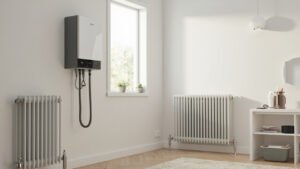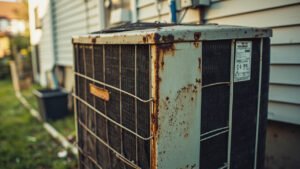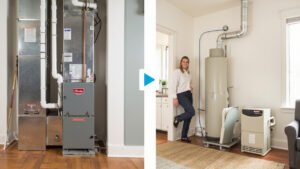
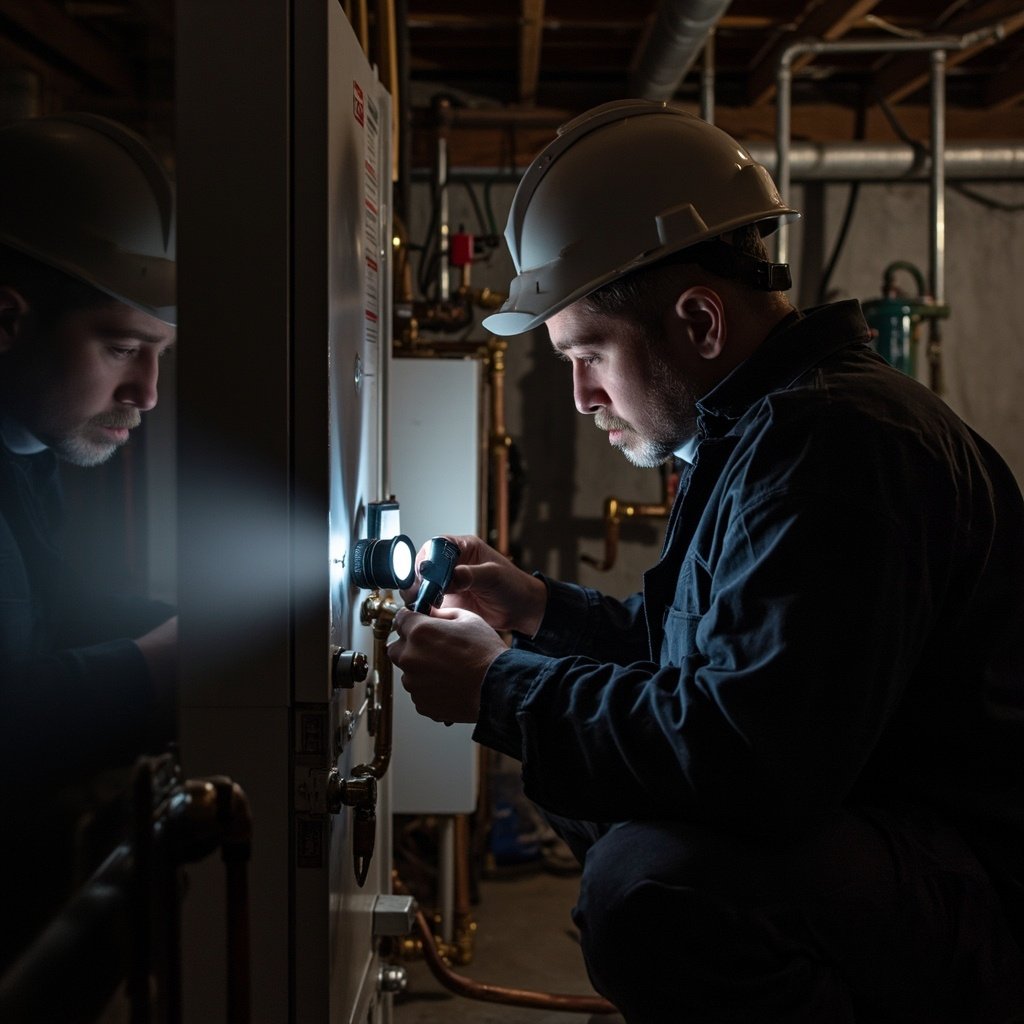
A broken boiler in winter is not an inconvenience — it is an emergency. Learn how boilers work → Boiler failures fall into two categories: urgent situations requiring immediate professional intervention (gas leaks, carbon monoxide, flooding, no heat in freezing temperatures) and non-urgent issues that can wait for a scheduled repair (minor leaks, kettling noise, low pressure). Identifying which category your situation falls into determines whether you call an emergency HVAC technician at 2am or schedule a repair for tomorrow morning.
What Counts as a True Boiler Emergency?
A true boiler emergency requires immediate professional intervention when any of these conditions are present: the smell of gas anywhere near the boiler, visible water pooling under or around the unit, the boiler is completely unresponsive with no heat and freezing temperatures inside, or a carbon monoxide detector is alarming. Do not attempt to troubleshoot these situations yourself — evacuate the home, call your gas provider from outside, and contact an emergency HVAC technician.
Gas Smell — Evacuate First
If you smell sulfur, rotten egg, or raw gas near your boiler:
- Do not operate any light switches, electrical outlets, or appliances
- Do not use your phone inside the house
- Open windows and doors on your way out
- From outside, call your gas company’s emergency line
- Do not re-enter until a gas technician clears the property
Natural gas leaks from boilers most commonly occur at the gas valve, union fitting, or injector pipe connections — areas where the rigid piping meets flexible connectors or where the gas train connects to the burner. Even a small leak warrants immediate evacuation; gas accumulation in a confined space creates explosion risk.
Carbon Monoxide Alarm
Carbon monoxide (CO) is colorless and odorless — the “rotten egg smell” is added artificially so leaks are detectable. If your CO detector alarms:
- Evacuate everyone from the home immediately
- Call 911 or your local fire department
- Do not re-enter until emergency services have ventilated the property and cleared it
- Have your boiler inspected by a licensed professional before resetting the alarm
CO production from a boiler indicates incomplete combustion — usually caused by a blocked flue, cracked heat exchanger, insufficient combustion air supply, or a failed fan/propeller that isn’t venting combustion gases properly. Learn why annual tune-ups prevent CO issues →
Water Leaking from the Boiler
Water pooling under a boiler indicates one of several failure modes:
- Pressure relief valve (PRV) discharging — the valve opens when system pressure exceeds safe limits, typically because the expansion vessel has failed or the system is overfilled
- Feed valve leak — the automatic or manual fill valve on the system may be dripping or weeping
- Boiler heat exchanger leak — water escaping from inside the heat exchanger (the most expensive repair)
- Pipe joint failure — a union, elbow, or coupling in the piping has failed
A small drip can sometimes be contained temporarily by placing a bucket and placing a heavy object over the overflow pipe to weigh it down — but this is not a fix. Even a minor leak can pressure-flood a home and cause thousands in water damage. Shut the system down and call a technician.
No Heat in Freezing Temperatures
When outdoor temperatures are below 20°F and the boiler has stopped heating, this is a genuine emergency for families with young children, elderly residents, or anyone with health conditions sensitive to cold. If you have an alternative heat source (electric space heater, fireplace), use it while you wait for emergency service.
Non-Urgent Boiler Problems That Can Wait
Not every boiler issue requires an emergency call. These problems are uncomfortable but not immediately dangerous — schedule a repair appointment within 24–72 hours rather than paying emergency rates:
Low System Pressure
A boiler that shows pressure below 1 bar on the gauge may simply need repressurizing via the filling loop. If the pressure drops gradually over days or weeks, there is a slow leak somewhere in the system — check visible pipe joints, the PRV outlet, and radiators for weeping. Learn about annual boiler service schedules →
If pressure drops rapidly after repressurizing, do not keep adding water — the leak is significant and needs professional repair before the system is used again.
Kettling and Noise
Kettling — a rumbling or banging noise from the boiler — occurs when limescale buildup inside the heat exchanger restricts water flow. The water overheats and boils in sections, causing the noise. Kettling reduces efficiency and can damage the heat exchanger over time, but a noisy boiler that is still producing heat does not require an emergency call.
Pilot Light Going Out
A boiler with a continuously disappearing pilot light usually has a faulty thermocouple (the sensor that tells the gas valve the pilot is lit). This is a common, inexpensive repair. Relight the pilot per the manufacturer’s instructions if you know the procedure, and schedule a repair for the thermocouple within a week or two.
One radiator not heating
A single cold radiator typically indicates a trapped air pocket (bleed the radiator) or a failed TRV (thermostatic radiator valve) on that unit. This is not an emergency — bleed the radiator first, and if it remains cold, book a service call.
How to Troubleshoot a No-Heat Boiler Before Calling for Emergency Service
Before calling for emergency service, check these four items: the thermostat is calling for heat and set to a temperature above room temperature, the boiler power switch is on, the time clock/programmer is set correctly, and the boiler’s reset button has not tripped. These issues account for a significant percentage of no-heat calls that turn out to be user error, not equipment failure.
Thermostat and Programmer Check
Set the room thermostat to 5°F above the current temperature. If you have a programmable schedule, manually override it to “constant” heat mode. Check that the programmer/timer is in heating mode and that the current time matches the schedule. A mis-set timer is the most common cause of “the boiler won’t come on” calls.
Reset Button
Many modern boilers have a visible reset button on the front panel — often marked with a small flame icon. If this has tripped (often indicated by a blinking light pattern), press it once and wait for the boiler to restart. Repeated tripping of the reset button indicates a more serious fault that needs professional diagnosis.
Gas Supply Check
Verify the gas valve on the inlet pipe to the boiler is fully open. In some homes, the gas valve is a lever that must be parallel to the pipe to allow flow. Check your meter if you have one — a gas meter issue would affect all gas appliances, not just the boiler.
Check the Flue
Ensure the flue pipe extending from the boiler to the outside is not blocked, disconnected, or visibly damaged. A blocked flue will cause the boiler to lock out for safety. Look for: kinks, disconnections at joints, ice or snow covering the terminal, or a bird’s nest in the terminal guard.
Emergency Boiler Repair Cost — What to Expect
Emergency boiler repair calls typically cost $150–$350 for the service call and trip charge, with additional costs of $100–$600 per component repair. After-hours, weekend, and holiday emergency rates are typically 1.5–2x normal labour rates. Boiler repair costs vary significantly based on the component that failed, the boiler brand, and whether parts are still under warranty.
Common Emergency Repair Costs
Emergency Call Premium
If you call for service after normal business hours (after 6pm, weekends, or holidays), expect to pay a premium:
- After-hours trip charge: $75–$150 additional
- Weekend service: 1.3–1.5x normal labour rate
- Holiday/emergency: 1.5–2x normal labour rate
Many HVAC companies offer annual maintenance contracts ($150–$300 per year) that include priority emergency service, waived trip charges, and annual inspections that catch problems before they become emergencies.
How to Prevent Boiler Emergencies
Annual professional boiler maintenance is the single most effective way to prevent emergency breakdowns. A typical service includes: checking gas pressure and combustion efficiency, inspecting the heat exchanger for cracks or corrosion, cleaning the burner and ignition electrodes, checking the expansion vessel, testing safety controls, and flushing the system to remove sludge.
Signs a Boiler Emergency Is Coming
Watch for these warning signs in the weeks before a failure:
- Running at higher pressure than usual — pressure climbing toward 2 bar
- Rusting or weeping at any pipe joint or valve
- Soot or black staining around the boiler’s case or near the flue
- Frequent resetting — the boiler needs the reset button pressed more than once per month
- Yellow or flickering flame — a healthy boiler flame is steady and blue
- Kettling sounds becoming louder or more frequent
- Water color — rusty water from taps when the boiler is running indicates internal corrosion
Boiler Lifespan by Type
A boiler approaching 15 years old that has not been professionally serviced is a candidate for replacement rather than expensive repair — especially if the repair cost exceeds roughly 50% of replacement cost.
Emergency Boiler Repair FAQ
Should I call an emergency plumber or an HVAC technician for a boiler failure?
For a gas-fired boiler, call an HVAC technician — they handle the heating system, gas connections, and combustion components. A plumber handles water and pipework issues. If you have a water leak from the boiler’s internal components (heat exchanger, PRV), you may need both, but start with an HVAC company that specializes in boiler work. Find the right HVAC contractor →
Can I temporarily fix a leaking boiler myself?
No — do not attempt to repair gas connections, the heat exchanger, or pressure components yourself. You can contain water from a leaking pipe joint with towels and a bucket while you wait for professional help. Do not operate a boiler with an active water leak.
Why does my boiler keep needing the reset button pressed?
Frequent reset button trips indicate either a faulty flame sensing electrode, a blocked flue, insufficient gas pressure, a failing pump, or a malfunctioning PCB. Each of these requires professional diagnosis. Keep pressing the reset button temporarily if you have no alternative heat, but book a service call within 48 hours.
How do I know if my boiler needs replacement instead of repair?
If the boiler is over 15 years old, requires more than one major repair in a 12-month period, has a failed heat exchanger, or is showing signs of internal corrosion (rusty water, soot around the case), replacement is usually more economical than continued repair. Get two quotes — one for repair and one for replacement — before committing to either.
What should I do if my boiler breaks down and I cannot get emergency service immediately?
Use safe alternative heating: electric space heaters (keep 3 feet of clearance from anything flammable), a fireplace, or move to a single warm room. Keep cabinet doors under sinks open to let warmth reach pipes. Do not use the oven or stove to heat your home — this creates carbon monoxide risk. Check on elderly relatives and neighbours.