What Does AFUE Stand For and What Does It Measure?
AFUE stands for Annual Fuel Utilization Eff<a href="/heatypes of heating systems ting-system-efficiency/”>heating system efficiency iciency—a percentage that measures how effectively your furnace converts fuel into heat over an entire heating season. A 95% AFUE furnace converts 95 cents of every dollar of fuel into usable warmth; the remaining 5 cents is lost through exhaust gases and imperfect combustion.
AFUE applies exclusively to combustion heaheat pumps ting equipment—<a href="/gas-furgas furnaces naces-2/”>gas furnaces, oil furnaces, boilers, and some heat pumps. It does not apply to electric resistance heaters (which by definition are 100% efficient at converting electricity to heat, but are extremely expensive to run per BTU).
The key difference between AFUE and other efficiency ratings: AFUE is measured across an entire heating season, not just at peak output. It accounts for start-up losses, off-cycle standby losses, and the inefficiencies of short-cycling—making it the most accurate representation of real-world performance.
What Is a Good AFUE Rating for a Home Furnace?
A good AFUE rating for most homes in cold-to-moderate climates is 90% or higher. The federal minimum for new gas furnaces is 81% AFUE, so anything below 90% on a new purchase is difficult to justify when the efficiency premium pays back in under 10 years.
Here’s how AFUE tiers break down:
| AFUE Range | Classification | Real-World Interpretation |
|---|---|---|
| 80–84% | Standard | Older, non-condensing units; common in mild climates |
| 85–89% | Mid-efficiency | Better build quality; non-condensing |
| 90–94% | High-efficiency (non-condensing to partially condensing) | Strong value for moderate climates |
| 95–98% | Condensing | Captures latent heat from water vapor in exhaust |
| 99% | Premium condensing | Maximum available; best for very cold climates |
The “sweet spot” for most homeowners is 95% AFUE. The upgrade from 90% to 95% nearly doubles the efficiency gain (cutting waste from 10% to 5%), and the equipment premium typically pays back in 8–12 years through fuel savings.
How Does AFUE Compare to HSPF and COP Ratings?
AFUE measures furnace and boiler efficiency using a percentage scale; HSPF and COP measure heat pump efficiency on different scales. The key difference: AFUE applies to combustion appliances (gas, oil), while HSPF and COP apply to heat pumps, which move heat rather than generate it by burning fuel.
HSPF (Heating Seasonal Performance Factor)
HSPF measures heat pump heating efficiency over an entire season, expressed as a ratio. Higher numbers mean better efficiency.
| HSPF | AFUE Equivalent | Efficiency Level |
|---|---|---|
| 8 | ~73% | Lower efficiency |
| 9 | ~82% | Standard efficiency |
| 10 | ~91% | High efficiency |
| 11 | ~100% | Very high |
| 12 | ~109% | Premium |
| 13+ | 118%+ | Exceptional |
A heat pump with an HSPF of 10 is roughly equivalent to a 91% AFUE gas furnace in terms of heating energy delivered per unit of source energy consumed.
COP (Coefficient of Performance)
COP measures efficiency at a specific outdoor temperature—typically 47°F and 17°F. A COP of 3.0 means the heat pump produces 3 BTUs of heat per 1 BTU of electrical energy consumed.
What AFUE Rating Do You Need for Your Climate Zone?
Your climate zone determines the AFUE rating that makes economic sense. The longer your heating season, the faster a high-efficiency furnace pays for itself through fuel savings.
| Climate Zone | Heating Degree Days | Recommended AFUE | Reasoning |
|---|---|---|---|
| Zones 1–3 (Hot/Humid) | <2,000 HDD | 80–85% | Short season; efficiency premium takes 15+ years to recover |
| Zone 4 (Mixed) | 2,000–4,000 HDD | 90–94% | Moderate season; good payback on mid-high efficiency |
| Zone 5 (Cold) | 4,000–6,000 HDD | 95–98% | Long season; high efficiency pays back in 8–12 years |
| Zone 6–8 (Very Cold/Extreme) | 6,000+ HDD | 95–99% | Very long season; maximum efficiency is justified |
In Zones 5 and colder, a 95%+ AFUE condensing furnace is almost always the right choice. The fuel savings over a 15-year furnace lifespan will exceed the installation premium by thousands of dollars.
Frequently Asked Questions
What is the federal minimum AFUE for a new gas furnace?
The federal minimum AFUE for new residential gas furnaces is 81%. Units below this efficiency cannot be legally sold in the US. Most standard-efficiency new units fall in the 80–84% range.
Is 95% AFUE worth the extra cost over 90%?
Yes, in most cold and mixed climates. The upgrade typically costs $300–$600 more but saves $100–$150 per year in fuel costs—a payback of 4–6 years. Over a 15-year furnace lifespan, that’s $1,500–$2,250 in savings.
Does AFUE account for duct losses?
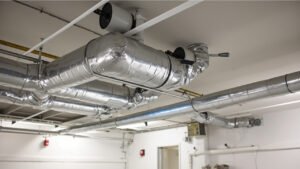
No—AFUE measures the furnace’s combustion efficiency, not the delivery efficiency of your duct system. Leaky ducts in an unconditioned attic can reduce effective heating delivery by 10–20%. Have a Manual D duct audit if you’re unsure about duct performance.
Can an older furnace with low AFUE be improved?
Limited gains are possible through maintenance and thermostat upgrades. A professional tune-up can restore 2–5% of lost efficiency. A programmable or smart thermostat can save an additional 5–15% by reducing unnecessary heating cycles. But no modification brings an old 70% AFUE furnace close to modern 95% standards—replacement is the only real solution.
How does AFUE relate to ENERGY STAR certification?
Gas furnaces must be 95% AFUE or higher to earn ENERGY STAR certification. Oil furnaces need 85% AFUE or higher. ENERGY STAR units qualify for federal tax credits under the Inflation Reduction Act.