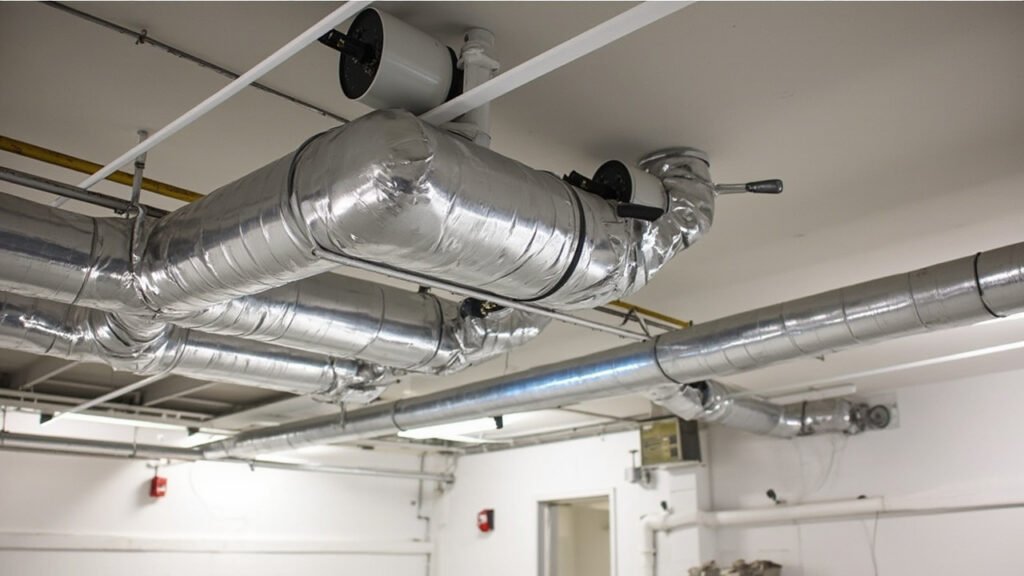
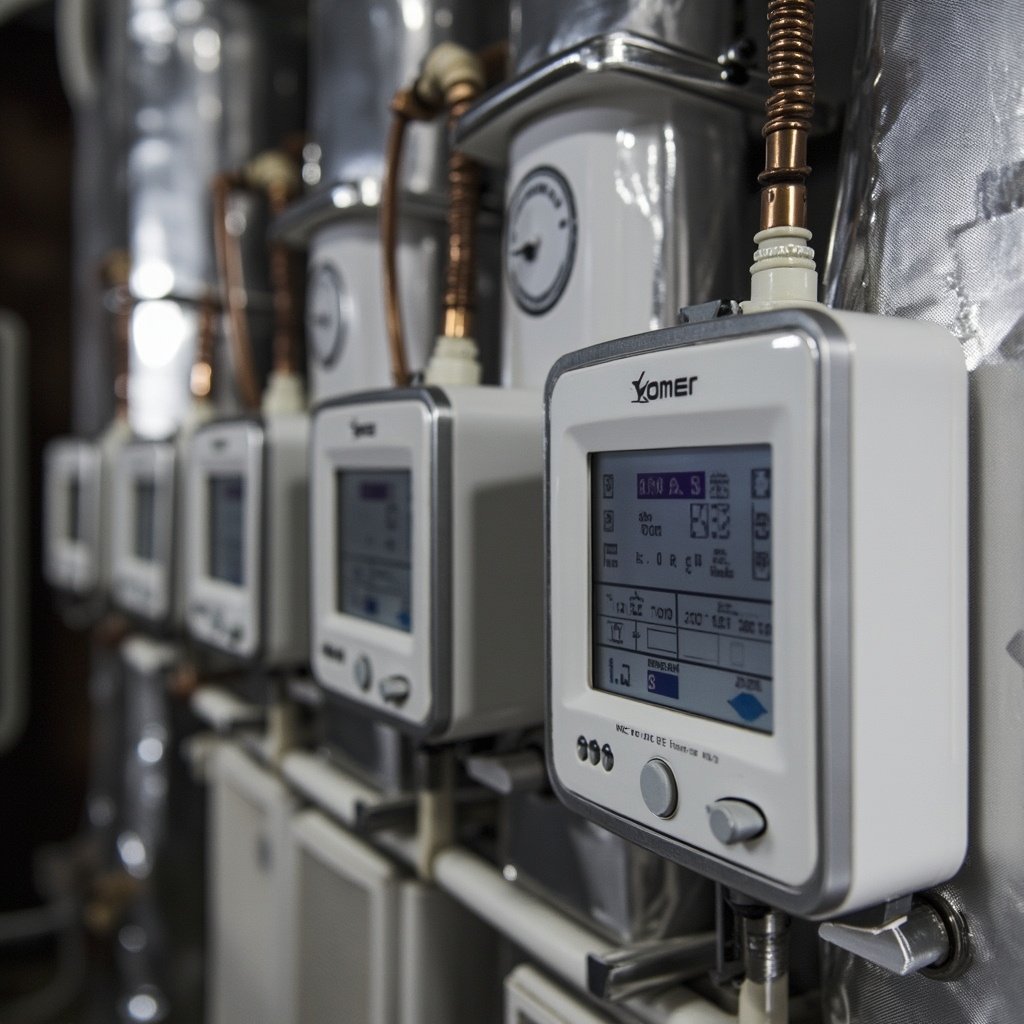
Zone control systems divide a home’s heating into multiple independently controlled areas, each with its own thermostat and motorized damper, so that only occupied rooms are heated while unoccupied areas remain cooler. Learn about HVAC zoning laws and regulations → A properly designed zoning system reduces heating energy consumption by 20–35% in typical homes by eliminating over-conditioning of rarely used spaces — bedrooms used only at night, living rooms empty during the workday, basements and guest rooms that see intermittent use. The energy savings alone typically pay for a zoning system installation within 5–8 years.
How Zone Heating Works: The Basic Principle
Zone heating works by installing motorized dampers in the ductwork and connecting each zone to its own thermostat. When a thermostat in one zone calls for heat, the control panel opens the dampers for that zone and activates the furnace or heat pump — while zones that have satisfied their thermostat demand remain closed. This allows the heating system to direct 100% of its capacity to the zones that need heat, rather than over-heating occupied spaces to satisfy a single thermostat in one location.
A simple example: a two-story home with a single thermostat on the first floor typically overheats the second floor during the day when the first floor is occupied but the second floor is empty. With zoning, the second floor thermostat calls for no heat, the second-floor dampers close, and all heating capacity goes to the first floor.
Components of a Zone System
A residential zoning system consists of:
- Motorized dampers — installed in the supply (and sometimes return) duct branches for each zone. When the zone thermostat calls for heat, the damper opens. When the zone is satisfied, the damper closes. Dampers are typically of two types:
- Round butterfly dampers — a simple blade that rotates 90° to block airflow
- Rectangular zone dampers — similar design, used in rectangular duct runs
- Both types use a small electric motor (24V) that draws only a few watts when cycling
- Zone thermostats — one per zone, typically programmable or smart thermostats. Each thermostat independently calls for heat or cooling based on the temperature in its zone. The thermostats connect to the zoning control panel, not directly to the equipment.
- Zoning control panel — the brain of the system. Receives signals from all zone thermostats, determines whether the HVAC equipment should run, and controls which dampers are open or closed. The panel also handles equipment protection logic (ensuring the furnace doesn’t run if all zones are satisfied, preventing short-cycling).
- Equipment interlock — the connection between the zoning panel and the furnace or heat pump. The panel tells the equipment when to run and when to stand by, based on zone demand.
- Bypass damper (in some systems) — a pressure-relief damper that opens when all zones are closed to prevent excessive air pressure buildup in the duct system from the blower running against closed dampers.
Benefits of Zone Heating
Zone heating reduces energy consumption by 20–35% in a typical home by eliminating over-conditioning of unused spaces, provides more consistent comfort room-to-room, and allows different temperature setpoints for different areas — such as a cooler basement during the day and a warmer bedroom at night.
Energy Savings Breakdown
In a home with a single thermostat controlling the entire house, the system must satisfy the coldest area of the home (the zone requiring the most heat) to maintain comfort everywhere. This means rooms with lower heating demand (south-facing rooms in winter, rooms with better insulation, lower floors with internal heat gains) are over-conditioned. Zoning eliminates this waste.
For a home heating with natural gas at $1.20 per therm, a 25% reduction in heating energy consumption represents approximately $200–$600 per year depending on climate, home size, and current energy use. In climates with harsh winters (Heating Degree Days above 5,000), the savings are at the higher end of this range.
Improved Comfort
Zoning eliminates the common complaint of hot upstairs and cold downstairs (or vice versa) that plagues single-thermostat homes. Each zone maintains its own temperature independently, eliminating the tug-of-war between competing areas of the home.
Smart Scheduling Flexibility
With smart thermostats in each zone, schedules can be set to match actual use patterns:
- Master bedroom: warm at 10pm, setback during the day
- Home office: warm during work hours, setback at 6pm
- Guest room: setback except on weekends
- Living room: warm during evening hours, setback during the day
This granular scheduling multiplies the energy savings beyond what static zoning alone provides.
Types of Zone Systems
There are three main approaches to zone heating: duct zoning with motorized dampers, radiator zoning with thermostatic radiator valves (TRVs), and room-by-room heat pump zoning with multiple indoor units (mini-split systems). Each approach suits different home types and heating systems.
Duct Zoning — For Forced-Air Systems
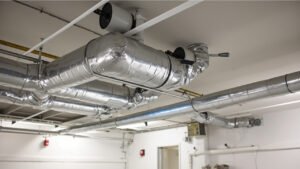
Duct zoning uses motorized dampers installed in the duct branches to redirect airflow to occupied zones. This is the most common zoning approach for homes with central furnaces or heat pumps.
A duct zoning system can be designed as:
- Master/slave zoning — one “master” thermostat (typically in the main living area) controls equipment firing, while “slave” thermostats only open and close dampers
- True zoning — each zone thermostat controls both its damper and equipment firing; the system runs when any zone calls and stops when all zones are satisfied
- Variable air volume (VAV) zoning — dampers partially modulate rather than fully opening and closing, maintaining consistent airflow while redirecting it (more complex and expensive, used in larger homes)
Thermostatic Radiator Valve Zoning — For Boiler Systems
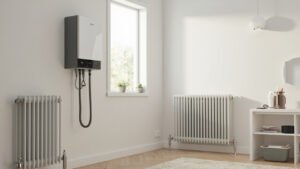
In hydronic (boiler) systems, zoning is achieved using thermostatic radiator valves (TRVs) on individual radiators or zone valves on the pipe manifold. This approach does not require a duct system.
Thermostatic radiator valves (TRVs) are self-contained mechanical thermostats mounted directly on the radiator. When the room temperature rises above the TRV’s setpoint, the valve closes, reducing or stopping hot water flow to that radiator. When the room cools, the valve opens. TRVs cost $30–$80 per radiator and require no electricity or wiring — they are purely mechanical.
For more precise zone control, zone valves (motorized valves installed on the pipe manifold) can control multiple radiators as a group — for example, closing off all radiators in the upstairs zone when those rooms are unoccupied.
Mini-Split Zoning — For Heat Pump Systems
A ductless mini-split system is inherently zoned — each indoor unit serves one room or zone, independently controlled by its own remote or wall thermostat. Multiple indoor units connect to a single outdoor unit. This is the most effective and efficient zoning approach for homes without existing ductwork, because each room has its own targeted heating and cooling without the energy losses associated with duct leakage.
Mini-split zoning costs more upfront per zone ($2,000–$4,000 per indoor unit installed) but provides superior efficiency because there is no duct system to leak air through, and each zone’s inverter-driven compressor modulates output precisely to match demand.
Common Zoning Problems and How to Avoid Them
The most common zoning problems are improper system sizing (zoning a system that is already at the edge of capacity), reduced airflow through partially closed dampers causing equipment overheating, and control logic errors that cause short-cycling. Proper design by a qualified HVAC contractor using ACCA Manual S and Manual D calculations prevents most of these issues.
Problem 1: Equipment Overheating Due to Restricted Airflow
When a zoning system closes most dampers and only one or two zones remain open, the airflow through the furnace or heat pump is dramatically reduced. Reduced airflow causes:
- The heat exchanger to overheat (in gas furnaces) — triggering the limit switch and shutting the furnace down
- In heat pumps, reduced airflow lowers heating output and can trigger a safety shutdown
Solution: The zoning control panel must have a minimum airflow interlock that prevents the equipment from firing if fewer than a minimum number of zones are open. All zoning panels include this logic — but poorly installed systems sometimes bypass it. The minimum should be set to ensure the furnace receives at least the minimum CFM required for safe operation.
Problem 2: Short-Cycling Due to Rapid Zone Switching
If one zone satisfies quickly (a small room that heats fast) and another zone is still demanding heat, the system continues running — which is correct. But if one zone’s thermostat satisfied and closed its damper, and then the next zone also satisfied and closed its dampers, the system shuts off — only for the first zone to immediately call for heat again as it cools down. This creates a short-cycling pattern that wastes energy and wears equipment.
Solution: Zoning control panels include a minimum run time setting (typically 2–5 minutes) and a cycle inhibitor that prevents the equipment from turning off if it has been running for less than the minimum run time, even if all zones temporarily close. This prevents short-cycling caused by rapid zone changes.
Problem 3: Negative Pressure in Return Air System
When supply dampers close but the return air system remains open (if the return is not zoned), the blower creates negative pressure in the sealed duct system. This can:
- Cause supply air leaks at disconnected or loose duct joints to worsen (being sucked harder rather than pushed)
- In extreme cases, cause return air to be drawn from unconditioned spaces (attic, crawl space)
Solution: Use a bypass damper that opens when all zones are closed, allowing excess supply air to return to the return air plenum without pressurizing the supply side. Alternatively, zone both supply and return dampers together as a single zone pair.
Zoning Laws and Code Requirements
Installing a zoning system must comply with the manufacturer’s installation instructions and local building codes, which typically require that each zone have an independent thermostat, that the equipment protection controls (high-limit switches, minimum airflow interlocks) remain functional, and that the system meet the home’s total heating and cooling load requirements at design conditions. In some jurisdictions, a zoning system that reduces airflow to a gas furnace below the manufacturer’s minimum CFM requirement may void the furnace’s certification.
The installation must also meet:
- ASHRAE 62.1 ventilation requirements — each zone must receive adequate outside air ventilation when occupied
- IMC (International Mechanical Code) requirements for duct sealing and insulation
- NFPA 54 (National Fuel Gas Code) requirements for gas furnace installations with modified airflow
Always check with your local building department before installing a zoning system, as some jurisdictions require permits and inspections for modifications to HVAC ductwork and controls. Read the full zoning laws guide →
Zone Control FAQ
Does zoning void my furnace warranty?
Zoning itself does not void a furnace warranty — but improper installation that causes the furnace to operate below its minimum airflow rating can void the heat exchanger warranty. The key requirement is that the furnace receives its minimum rated CFM of airflow during operation, regardless of how many zones are open. A properly designed zoning system with adequate minimum-airflow interlocks does not affect warranty coverage.
Can I zone my existing ductwork, or do I need new ducts?
Most existing ductwork can be adapted for zoning by installing motorized dampers in the branch runs. The duct system must have adequate capacity to serve all zones simultaneously at design conditions (the highest heating demand scenario) — if the existing ducts are already at capacity with all branches open, zoning will reduce airflow to each zone below what is needed when multiple zones call simultaneously. A professional load calculation and duct evaluation (using Manual D) determines whether existing ducts can support zoning.
How many zones should a home have?
The number of zones depends on the home’s layout and use patterns. A typical single-family home benefits from 2–4 zones: upstairs vs. downstairs is the most common division, with separate zones for the basement (if unconditioned or intermittently used) and for living areas vs. sleeping areas. More than 4 zones adds cost and complexity without proportional comfort benefit in most homes. A home with 4+ zones typically uses a commercial-grade zoning control panel rather than a residential unit.
Can I use smart thermostats with a zoning system?
Yes — most modern zoning control panels are compatible with standard 24V thermostats, including smart thermostats (Nest, ecobee, Honeywell T6, etc.). Each zone thermostat must use the same voltage system as the zoning panel (almost always 24V). Smart thermostats in each zone provide scheduling flexibility that amplifies the energy savings of zoning.
What is the difference between zoning and multi-stage thermostats?
A multi-stage thermostat sends a signal for second-stage heat when the temperature gap is very large (typically more than 2–3°F from setpoint). Zoning solves a different problem — it directs conditioned air to where it is needed, rather than sending it everywhere at once. Zoning and multi-stage thermostats are complementary, and most zoning systems work with multi-stage equipment.