Introduction
Right, so your kitchen cabinet hinge has carked it. Maybe the door’s hanging off at a weird angle, or the hinge is squeaking like a rusty gate. Perhaps the screws keep coming loose no matter how many times you tighten them, or the soft-close mechanism has given up the ghost entirely.
Before you call in a tradie or start googling new kitchen quotes, take a breath. Most kitchen cabinet hinge problems are actually pretty easy to fix yourself, and you’ll save a decent chunk of cash doing it.
In this guide, I’ll show you how to fix the most common kitchen cabinet hinge problems, from loose screws and stripped screw holes to broken hinges and squeaky doors. Most of these repairs take less than 15 minutes and require nothing more than basic tools you probably already have.
Let’s get your cabinet doors back in working order, yeah?
Common Kitchen Cabinet Hinge Problems (And How to Spot Them)
Before we dive into the fixes, let’s figure out what’s actually wrong. Here are the most common hinge problems:
Loose or Sagging Doors The door droops down or won’t stay in position. Usually caused by loose screws or worn screw holes.
Stripped Screw Holes The screws spin freely and won’t tighten. The wood around the screw hole has worn away or cracked.
Broken or Bent Hinges The hinge itself is visibly damaged, cracked, or bent. This happens from slamming doors or overloading cabinets.
Squeaky Hinges Your cabinet sounds like a haunted house every time you open it. Usually just needs a bit of lubrication.
Soft-Close Not Working The door slams shut instead of closing gently. The dampening mechanism inside the hinge has worn out.
Hinge Pulled Away from Cabinet The screws have pulled out of the cabinet frame completely, and the door’s barely hanging on.
Tools and Materials You Might Need
Here’s what to have on hand:
- Phillips head screwdriver
- Toothpicks or wooden skewers
- Wood glue (PVA or carpenter’s glue)
- Sandpaper (optional)
- Drill and drill bits (for some repairs)
- Replacement screws (sometimes longer ones help)
- WD-40 or silicone spray lubricant
- Replacement hinges (if needed)
Don’t worry, you won’t need all of this for every repair. I’ll tell you what you need for each specific problem.
How to Fix Loose Kitchen Cabinet Hinges
This is the most common problem, and thankfully, it’s also the easiest to fix.
Quick Fix: Just Tighten the Screws
First, try the obvious solution:
- Open the cabinet door fully
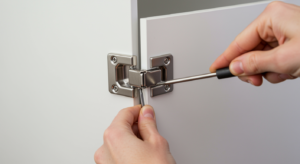
- Use a screwdriver to tighten all the hinge screws (both on the door and the cabinet frame)
- Make sure you tighten them firmly, but don’t go crazy and strip them
If the screws tighten up properly and the door feels solid again, you’re done. Easy as.
If Screws Won’t Tighten: Fix Stripped Screw Holes
If the screws just spin and won’t tighten, the screw holes are stripped. Here’s how to fix them:
The Toothpick Method (Quick and Easy):
- Remove the loose screw completely
- Break a few toothpicks or wooden skewers to fit the hole
- Put a small dab of wood glue on each toothpick
- Push the toothpicks into the screw hole until it’s filled
- Break off any excess toothpick sticking out
- Let the glue dry for a couple of hours (or overnight if you’re not in a rush)
- Screw the hinge back in – the screw will now bite into the wood-filled hole
This works brilliantly for small stripped holes and is the fix I use most often.
The Golf Tee Method (For Bigger Holes): Same principle, but use a wooden golf tee instead of toothpicks:
- Remove the screw
- Put wood glue on a golf tee
- Tap it into the hole with a hammer until it’s snug
- Cut or break off the excess
- Let it dry
- Drill a small pilot hole (smaller than your screw)
- Screw the hinge back in
The Longer Screw Method: If the hole isn’t completely stripped:
- Get a screw that’s 6-10mm longer than the original
- This will bite into fresh wood deeper in the cabinet
- Make sure the screw head isn’t too big, or it won’t fit in the hinge
The Dowel Method (Most Permanent Fix): For badly damaged holes:
- Remove the hinge completely
- Drill out the stripped hole with a 6-8mm drill bit
- Cut a wooden dowel to fit (you can buy these at Bunnings)
- Put wood glue on the dowel
- Tap it into the hole
- Let it dry completely (24 hours is best)
- Drill a new pilot hole through the dowel
- Remount the hinge with new screws
This is the most solid repair and will last for years.
How to Tighten Hinges on Kitchen Cabinets (Preventative Maintenance)
Want to stop your hinges from getting loose in the first place? Here’s how:
Regular Checks: Every 6-12 months, go around your kitchen and tighten all the hinge screws. Takes about 10 minutes and prevents bigger problems.
Don’t Overtighten: Tight is good. Gorilla-tight is bad. If you overtighten screws, you’ll strip the holes or crack the cabinet material.
Use the Right Screwdriver: Make sure your screwdriver fits the screw head properly. A loose fit will strip the screw head, making it impossible to tighten later.
Check for Deeper Issues: If screws keep loosening, check if:
- The cabinet is level (unlevel cabinets put strain on hinges)
- You’re overloading the shelves (heavy stuff makes doors sag)
- The hinges are the right type for your door weight
How to Repair Kitchen Cabinet Hinges That Are Broken
Sometimes the hinge itself is the problem. Here’s how to tell if you need to repair or replace:
Can Be Repaired:
- Loose hinge arms that just need adjusting
- Hinges that work but squeak
- Soft-close mechanisms that need adjustment
- Minor surface rust or dirt buildup
Need Replacing:
- Cracked or broken hinge bodies
- Bent hinge arms that won’t straighten
- Completely seized hinges
- Hinges missing parts
If your hinge is broken, you’ll need to replace it. I’ll cover that in the next section.
How to Replace Kitchen Cabinet Hinges
When a hinge is beyond repair, replacing it is straightforward. Here’s how:
Step 1: Remove the Old Hinge
- Open the door fully
- Unscrew the hinge from both the door and the cabinet frame
- If you’ve got multiple hinges on the door, remove them one at a time and support the door
Step 2: Check What Type You Need. Take the old hinge to Bunnings or your local hardware store. You’ll need to match:
- The hinge type (overlay, inset, or half-overlay)
- The mounting plate style
- Whether it’s soft-close or standard
Most modern kitchen cabinets use 35mm concealed hinges, but double-check the size.
Step 3: Install the New Hinge
- Attach the mounting plate to the cabinet frame using the same screw holes
- Attach the hinge to the door (again, use existing holes if possible)
- Clip the hinge onto the mounting plate
- Adjust as needed (check our guide on adjusting cabinet hinges)
Pro Tip: If you’re replacing multiple hinges, do them one at a time to avoid mixing up which door goes with which hinge.
Can You Replace Hinges on Kitchen Cabinets Without Removing Doors?
Yes and no. It depends on your hinge type.
European/Concealed Hinges (Most Common): These clip onto a mounting plate, so you can remove the hinge without taking the door off:
- Open the door
- Press the release clip on the hinge
- The hinge unclips from the mounting plate
- Swap in the new hinge
- Clip it back on
Traditional Hinges: These are screwed directly to the door and frame, so you’ll need to support the door or remove it completely to replace them.
How to Fix Squeaky Kitchen Cabinet Hinges
Squeaky hinges can be annoying, but they’re easy to fix.
Quick Fix:
- Open the cabinet door fully
- Spray a bit of WD-40 or silicone spray on the hinge pivot points
- Open and close the door a few times to work in the lubricant
- Wipe off any excess
Better Fix (Lasts Longer):
- Remove the door (if using concealed hinges, just unclip it)
- Clean the hinge with a damp cloth to remove any gunk
- Apply a small amount of silicone lubricant to the moving parts
- Work the hinge back and forth a few times
- Reattach the door
What NOT to Use: Don’t use cooking oil or grease – these attract dust and gunk, making things worse over time.
How to Fix Soft-Close Kitchen Cabinet Hinges
Soft-close hinges are brilliant until they stop working. Here’s what to try:
If the Door Slams Instead of Closing Gently:
Option 1: Adjust the Dampening
- Look for a small screw or dial on the hinge (often marked with + and -)
- Turn it slightly to increase the dampening force
- Test the door and adjust until it closes smoothly
Option 2: Clean the Mechanism
- Sometimes dirt and grease gum up the soft-close mechanism
- Wipe down the hinge with a damp cloth
- Spray a tiny bit of silicone lubricant on the moving parts
Option 3: Replace the Hinge If the soft-close mechanism is completely worn out (usually after 5-10 years of heavy use), you’ll need to replace the hinge. The dampening system can’t be repaired once it’s failed.
Fixing Hinges When the Cabinet Frame Is Damaged
Sometimes it’s not the hinge that’s busted – it’s the cabinet itself. If the screw holes have pulled right through the cabinet material:
For Particleboard or MDF Cabinets:
- Remove the hinge completely
- Fill the damaged area with wood filler or epoxy putty
- Let it dry completely (follow product instructions)
- Drill new pilot holes
- Remount the hinge
For Badly Damaged Areas: You might need to attach a small piece of timber to the inside of the cabinet to give the screws something solid to bite into:
- Cut a small block of hardwood to fit
- Glue and screw it to the cabinet frame
- Let the glue dry
- Mount the hinge to this new timber block
Preventing Future Hinge Problems
An ounce of prevention, right? Here’s how to keep your hinges working smoothly:
- Don’t Slam Doors: Even soft-close hinges wear out faster if you’re rough with them. Let the soft-close do its job.
- Don’t Overload Cabinets: Heavy shelves put extra strain on hinges and screws. Distribute weight evenly.
- Tighten Screws Regularly: A quick check every year or so prevents small problems from becoming big ones.
- Keep Hinges Clean: Wipe them down occasionally to prevent gunk buildup.
- Use Quality Hinges: If you’re replacing hinges, spend a bit extra on decent ones (Blum, Hafele, Hettich). Cheap hinges from the discount bin will just break again.
When to Call a Professional
Most hinge repairs are DIY-friendly, but sometimes you need a pro:
- The entire cabinet is coming away from the wall
- You need to replace all the hinges in your kitchen
- The cabinet frame is seriously damaged
- You’re not confident working with tools
There’s no shame in calling someone who does this for a living. Sometimes it’s worth the peace of mind.
Frequently Asked Questions
How much does it cost to replace kitchen cabinet hinges?
Hinges cost anywhere from $3 to $15 each, depending on quality. For a standard kitchen (say 20-30 hinges), you’re looking at $60-$450 in materials. Labour costs more if you hire someone, but it’s an easy DIY job.
How long do kitchen cabinet hinges last?
Good quality hinges should last 10-20 years with normal use. Cheap hinges might only last 5 years. Soft-close mechanisms tend to wear out a bit sooner.
Can I fix a hinge without removing the cabinet door?
Yep, for most repairs you can work with the door attached. Only major repairs or hinge replacements require taking the door off.
Why do my cabinet hinges keep breaking?
Usually because of overloaded shelves, slamming doors, poor quality hinges, or the cabinet isn’t level. Fix the underlying cause, or you’ll just keep breaking hinges.
Are all kitchen cabinet hinges the same size?
Nope! Most modern cabinets use 35mm concealed hinges, but there are different types (overlay, inset, half-overlay) and different brands. Take your old hinge to the hardware store to match it.
How do I know if I need to replace or just adjust my hinges?
If the hinge is cracked, bent, or has missing parts, replace it. If it’s just loose or misaligned, an adjustment or a quick repair usually sorts it.
Conclusion
There you go – everything you need to know about fixing kitchen cabinet hinges. Whether you’re dealing with loose screws, stripped holes, broken hinges, or annoying squeaks, you’ve now got the know-how to sort it yourself.
Most hinge repairs take 15 minutes or less, and they’ll save you the cost of calling a tradie or, worse, living with wonky cabinet doors that drive you mental every time you’re in the kitchen.
The key is catching problems early. If a screw feels loose, tighten it now. Don’t wait until it’s completely stripped and you need the toothpick trick. A few minutes of preventative maintenance beats an hour of repairs any day.
Now get out there and fix those hinges. Your kitchen will thank you for it.