Cabinet Storage Solutions: Why’s Your Kitchen So Messy?
Ever open a kitchen cabinet and—bam!—a plastic lid flies out like a tiny UFO? Whoosh! You’re not alone. Most kitchens don’t have a “space problem.” They have a “stuff has no home” problem.
Here’s the good news: Cabinet Storage Solutions fix that fast. They help you pick the best spot for each item, so you can grab what you need without digging, clunking, or doing a balancing act.
Quick answer (save this): The best cabinet storage solutions group items by job (cook, eat, store), place daily items at arm level, use vertical space (shelves, risers), and add simple helpers like pull-out trays, bins, and lazy Susans. That’s how you organize kitchen cabinets and drawers so they stay neat, not just “clean for one day.”
In this guide, you’ll learn how to organize kitchen cabinets step by step, where to put things in kitchen cabinets and drawers, what to do with deep and small cabinets, and even where to buy extra shelves for kitchen cabinets. We’ll also cover common mistakes, plus pro tricks used by organizers and cabinet designers.
[Suggested image: A messy cabinet on the left and the same cabinet neatly organized on the right]
What Cabinet Storage Solutions Really Are (And Aren’t)
Cabinet Storage Solutions are tools and simple systems that help your cabinets hold more, with less mess. Think: shelf risers, pull-out drawers, dividers, bins, under-shelf baskets, and door-mounted racks.
But here’s the twist. The “solution” is not just the product. It’s the plan. A lazy Susan won’t help if it’s filled with random things. Plop!
The 3 parts of a good cabinet system
- Zones: areas for cooking, baking, snacks, storage, and cleaning.
- Homes: each item gets a “parking spot.”
- Helpers: trays, bins, and dividers that keep items from drifting.
Common “helpers” you’ll see in modern kitchens
In 2026, the most common upgrades are simple and low-cost. People love:
- Pull-out shelves for base cabinets (no more crawling).
- Tiered risers for cans and spices (you can see everything).
- Pan organizers for baking sheets and cutting boards.
- Clear bins for snacks and packets (fast grab-and-go).
- Drawer dividers for utensils and tools (no “junk drawer soup”).
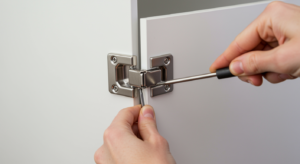
Also, if your cabinet doors don’t open smoothly, organizing gets annoying. A quick check of your hinges can save you daily frustration. If you’re curious about types and sizing, this guide on kitchen cabinet hinges types and sizes can help you spot what you have.
Fun Fact! Many pro organizers use a “one-touch rule”: if you can’t grab an item in one smooth move, the storage is too hard. That means it won’t stay organized.
Why Cabinet Storage Solutions Matter (More Than You Think)
A messy cabinet wastes time. It also wastes food, money, and energy. Ever buy paprika again because you couldn’t find it? Yup.
Real benefits you’ll feel fast
- Less time cooking: Studies on home workflow often show minutes lost per meal when tools aren’t easy to reach. Over a week, that adds up.
- Less food waste: When you can see what you have, you use it.
- Safer kitchen: Fewer falling stacks of plates. Fewer “ow!” moments.
- Less stress: A calm kitchen feels good. It just does.
Small kitchen? Even bigger payoff
If you’re searching how to organize kitchen cabinets in a small kitchen, it’s because every inch counts. Smart storage makes a tiny kitchen feel bigger. It’s like giving your cabinets a magic trick.
And there’s another hidden bonus: cabinets last longer when you don’t slam doors and wrestle with stuck drawers. If your doors feel “off,” learning about cabinet hinge types can help you understand what’s adjustable and what’s not.
Did You Know? Many cabinet makers design for “zones” too. It’s not just a Pinterest thing. It’s basic kitchen ergonomics—meaning the kitchen fits your body and moves.
[Suggested image: Simple kitchen zone map: Cooking zone, Prep zone, Coffee zone, Snack zone]
How Cabinet Storage Solutions Work (Step-by-Step)
You don’t need a full remodel. You need a simple plan. Here’s how to organize your kitchen cabinets in a way that sticks.
Step 1: Empty one cabinet (just one!)
Don’t do the whole kitchen at once. That’s how people burn out. Pick one cabinet. Take everything out. Wipe it down. Done.
Step 2: Sort into “keep, move, donate, toss”
- Keep: you use it.
- Move: it belongs somewhere else (like pantry or garage).
- Donate: extra mugs, duplicate tools.
- Toss: broken, rusty, cracked.
Step 3: Make zones that match your real life
Do you make school lunches? You need a lunch zone. Do you drink tea every day? You need a tea zone. Your kitchen should match you, not a showroom.
Step 4: Place items by “reach level”
- Eye/hand level: daily items (plates, cups, coffee).
- Low cabinets: heavy items (pots, appliances).
- High cabinets: party stuff, rarely used tools.
Step 5: Add 1–2 helpers only
This is the secret. Don’t buy 20 bins. Start with what fixes your biggest pain.
Try This! Set a 15-minute timer. Organize one cabinet only. Stop when the timer buzzes. Small wins stack up fast.
If you’re also dealing with doors that won’t line up after you reorganize, you may need a quick tweak. Here’s a helpful reference on how to adjust kitchen cabinet hinges (it’s easier than it sounds).
Best Practices: Where to Put Things in Kitchen Cabinets and Drawers
This is the big question: where to put things in kitchen cabinets and drawers so you don’t undo it all next week.
The “golden triangle” for daily cooking
Most kitchens work around the sink, stove, and fridge. Put items near where you use them:
- Near the stove: oils, spices, pans, spatulas.
- Near the sink: plates, cups, dishwasher tabs, towels.
- Near the fridge: food containers, lunch boxes, snack bins.
How to organize dishes in kitchen cabinets
Keep dishes close to the dishwasher if you have one. That makes unloading quick-quick. Use this basic layout:
- Plates: lower cabinet or deep drawer near the dishwasher.
- Bowls: same area, stacked by size.
- Glasses/mugs: upper cabinet at arm level.
- Serving platters: vertical rack or top shelf (less often used).
How to organize kitchen cabinets and drawers together
Drawers are your best friend for daily tools. Put:
- Top drawer: forks, spoons, knives (with a tray).
- Next drawer: cooking tools (tongs, whisks, peelers).
- Deep drawer: pots, pans, or food containers.
[Suggested image: Simple “kitchen cabinet organization diagram” showing where items go]
Fun Fact! Clear bins aren’t just pretty. They cut “search time” because your brain can spot the item fast, like finding a toy in a see-through box.
Cabinet Storage Solutions for Small, Deep, and Awkward Cabinets
Some cabinets are easy. Others are… a black hole. Let’s fix the tricky ones, including how to organize small kitchen cabinets and how to organize deep kitchen cabinets.
How to organize kitchen cabinets in a small kitchen
Small kitchens need tight rules:
- Keep counters clear: store appliances you use weekly, not yearly.
- Go vertical: add a shelf riser to double space for plates or cans.
- Use doors: hang wraps, bags, or a slim spice rack.
- Make “micro-zones”: one bin for snacks, one for baking, one for breakfast.
How to organize deep kitchen cabinets (no more lost stuff)
Deep cabinets hide things. That’s their whole personality.
- Pull-out trays: best fix. Everything slides out to you.
- Two-bin method: front bin for daily items, back bin for extras.
- Lazy Susan: great for bottles and jars (no tipping!).
Corner cabinets: the “where did my pot go?” zone
For corners, use a lazy Susan or a swing-out organizer (it swings out like a door). Brands people often buy include Rev-A-Shelf and Simplehuman (for some systems). Measure first, though.
Also, if corner doors rub or won’t close after you add organizers, it may be hinge-related. Learning the basics of kitchen cabinet hinge sizes can help when you’re troubleshooting fit and alignment.
Try This! Tape a note inside a deep cabinet: “Front = daily. Back = extras.” It sounds silly, but it trains everyone fast.
Common Mistakes That Make Cabinets Messy Again
You can do everything “right” and still end up with a mess if you hit these traps. Want to avoid the backslide? Here’s how.
Mistake 1: Organizing without decluttering
If you have 14 water bottles and use 2, no organizer will save you. Declutter first. Organizers are for the keepers.
Mistake 2: Buying bins before measuring
Measure cabinet width, depth, and shelf height. Then buy. Not the other way around. Otherwise: thunk—bins don’t fit.
Mistake 3: Storing items far from where you use them
If your coffee mugs are across the kitchen from your coffee maker, you’ll keep walking back and forth. Put items where the action happens.
Mistake 4: Stacking too high
Tall stacks fall. They also make you avoid using the cabinet. Use risers, shelves, or vertical organizers instead.
Mistake 5: No reset routine
Even great systems need a tiny reset. A 2-minute reset each night beats a 3-hour clean-up later.
Did You Know? Many professional home organizers suggest “one in, one out” for containers and mugs. It’s the easiest way to stop cabinet creep.
Advanced Pro Strategies (Like a Kitchen Designer Would Do)
Ready for next-level Cabinet Storage Solutions? These are the upgrades and habits that make your kitchen feel custom, even if it’s not.
Use a simple “kitchen cabinet organization diagram” (yes, really)
Draw a quick map of your cabinets. Nothing fancy. Boxes on paper work. Label zones: prep, cook, bake, snacks, dishes.
This is powerful if you live with family. Everyone can follow the map. No guessing.
How to adjust kitchen cabinet shelves for better space
Many cabinets have peg holes so shelves can move up or down. If your cereal boxes don’t fit, move a shelf. If your mugs waste space above them, lower a shelf.
For tricky shelves or doors, sometimes you’ll also need hinge alignment so doors don’t sag after changes. Knowing how to adjust kitchen cabinet hinges can make everything feel smooth again.
Choose organizers by “friction level”
Friction means: how annoying is it to put the item away?
- Low friction: open bins, pull-out trays, simple dividers.
- High friction: tiny boxes with lids, stacking puzzles, hard-to-reach shelves.
Pick low friction for daily items. Save fancy systems for rarely used stuff.
Where to buy extra shelves for kitchen cabinets
You have a few paths:
- Cabinet manufacturer: best match for color and fit, often pricier.
- Home improvement stores: common sizes, quick pickup.
- Online retailers: huge choice for pull-outs and risers.
- Local carpenter: great for odd sizes and custom needs.
Tip: bring measurements and photos. That saves time and returns.
[External link opportunity: cabinet manufacturer shelf ordering guide or installation PDF]
FAQ: Quick Answers for Kitchen Cabinet Organization
How do you organize kitchen cabinets?
Start by emptying one cabinet, sorting items into keep/move/donate/toss, and grouping what you keep by “job” (cooking, baking, snacks). Put daily items at arm level, heavy items low, and rarely used items high. Add 1–2 tools like bins or shelf risers to keep it neat.
How do I organize kitchen cabinets and drawers together?
Use cabinets for bulky items (dishes, pantry foods, appliances) and drawers for tools you grab often (utensils, gadgets, towels). Keep each drawer to one job, like “prep tools” or “cooking tools.” Place drawers near where you use them most to reduce steps.
How do you organize small kitchen cabinets?
Go vertical with shelf risers and stackable bins, and store only what you use weekly. Use cabinet doors for wraps or slim racks. Create small zones, like one bin for snacks and one for breakfast. Keep counters clear so the kitchen feels bigger and calmer.
How do you organize deep kitchen cabinets?
Use pull-out shelves if you can, or place items in labeled bins so you can lift them out. Keep daily items in the front and extras in the back. A lazy Susan works well for bottles and jars because it brings items forward with a simple spin.
Where should I put dishes in kitchen cabinets?
Put plates and bowls near the dishwasher or sink for easy unloading. Store glasses and mugs in an upper cabinet at arm level. Keep serving platters and special dishes on higher shelves. If you have deep drawers, they’re great for plates because they’re easy to reach.
[External link opportunity: home organization research or kitchen workflow study from a university or professional association]
Conclusion: Make Your Cabinets Work for You
You don’t need a perfect kitchen. You need a kitchen that feels easy. When you use Cabinet Storage Solutions the smart way—zones, reach levels, and a few simple helpers—you stop losing lids, you stop buying doubles, and you stop doing the cabinet shuffle.
Remember: start small. One cabinet. One win. Then another. Before you know it, you’ll know exactly where to put things in kitchen cabinets and drawers, and your kitchen will stay tidy without a big weekend project.
Your Mission: Pick one “pain cabinet” today. Set a timer for 15 minutes. Clear it, sort it, and give every item a home. Then choose one helper (bin, riser, or divider). That’s it. You’ve started a real system.
[Suggested image: A simple checklist graphic: Zones → Reach level → One helper → 2-minute nightly reset]