Introduction
Ever opened your kitchen cabinet and noticed the door’s sitting a bit wonky? Maybe there’s an annoying gap at the top, or the door’s rubbing against the frame? You’re not alone, mate. Kitchen cabinet hinges are brilliant little bits of hardware, but they do need a tweak now and then.
The good news? Adjusting kitchen cabinet hinges is dead easy. You don’t need to be a tradesman, and you definitely don’t need fancy tools. In most cases, all you need is a screwdriver and about 5 minutes per door.
In this guide, I’ll walk you through exactly how to adjust your kitchen cabinet hinges to fix common problems like sagging doors, gaps, and misalignment. We’ll cover different hinge types too, so whether you’ve got Blum soft-close hinges or basic overlay hinges, you’ll know exactly what to do.
Understanding Your Kitchen Cabinet Hinges
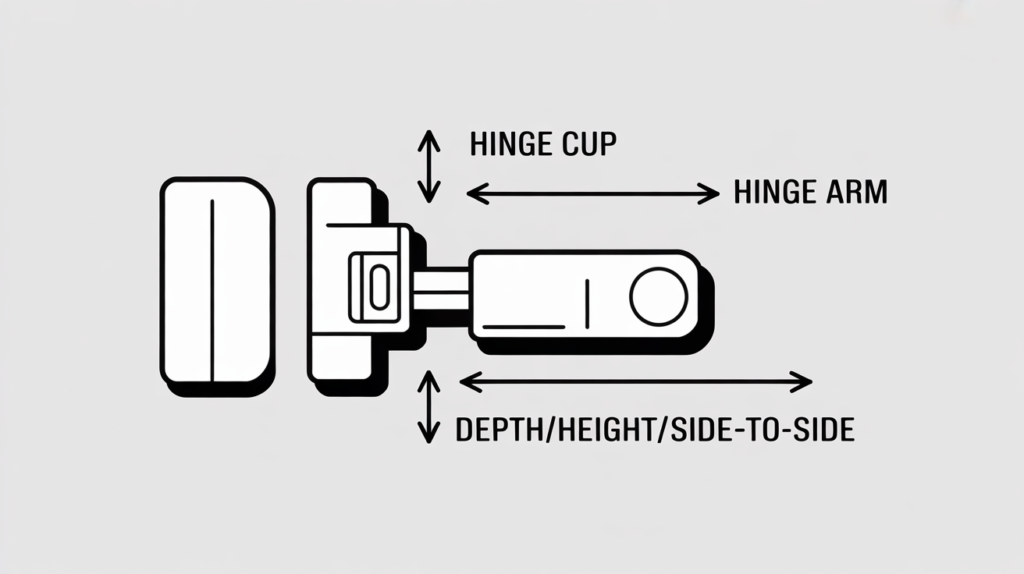
Before we dive into the adjustment process, let’s quickly cover what you’re working with. Most modern kitchen cabinets use what’s called a “European hinge” or “concealed hinge.” These are the hinges that hide inside the cabinet when the door’s closed.
These hinges are brilliant because they’ve got three adjustment points:
- Side-to-side adjustment (left and right)
- Up and down adjustment (height)
- In and out adjustment (depth)
This means you can fix pretty much any alignment issue without removing the door or the hinge itself.
What You’ll Need
Here’s your shopping list (spoiler: you probably already have everything):
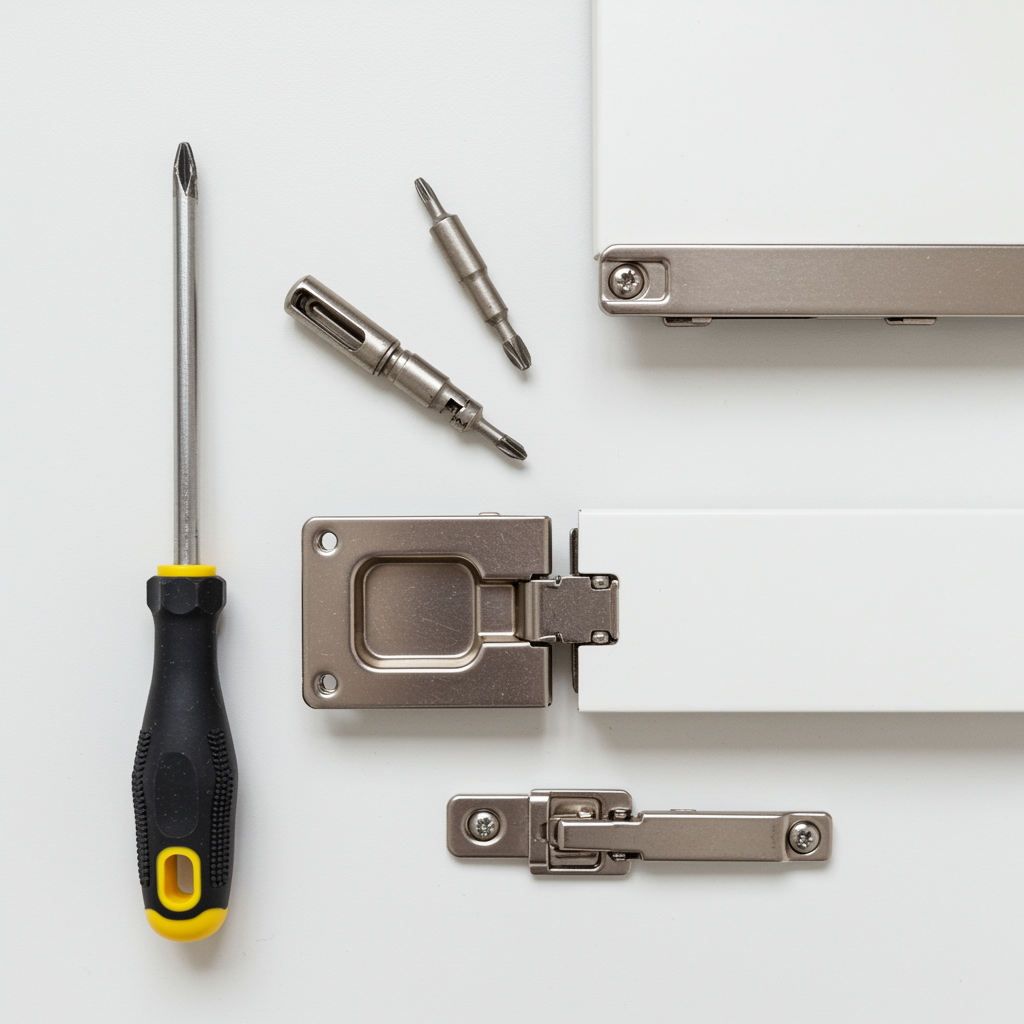
- Phillips head screwdriver (sometimes a flathead, depending on your hinges)
- That’s it, really
Some people reckon a drill with a screwdriver bit makes the job quicker, but honestly, a regular screwdriver works just fine.
How to Adjust Kitchen Cabinet Hinges: Step-by-Step Guide
Step 1: Figure Out What Needs Adjusting
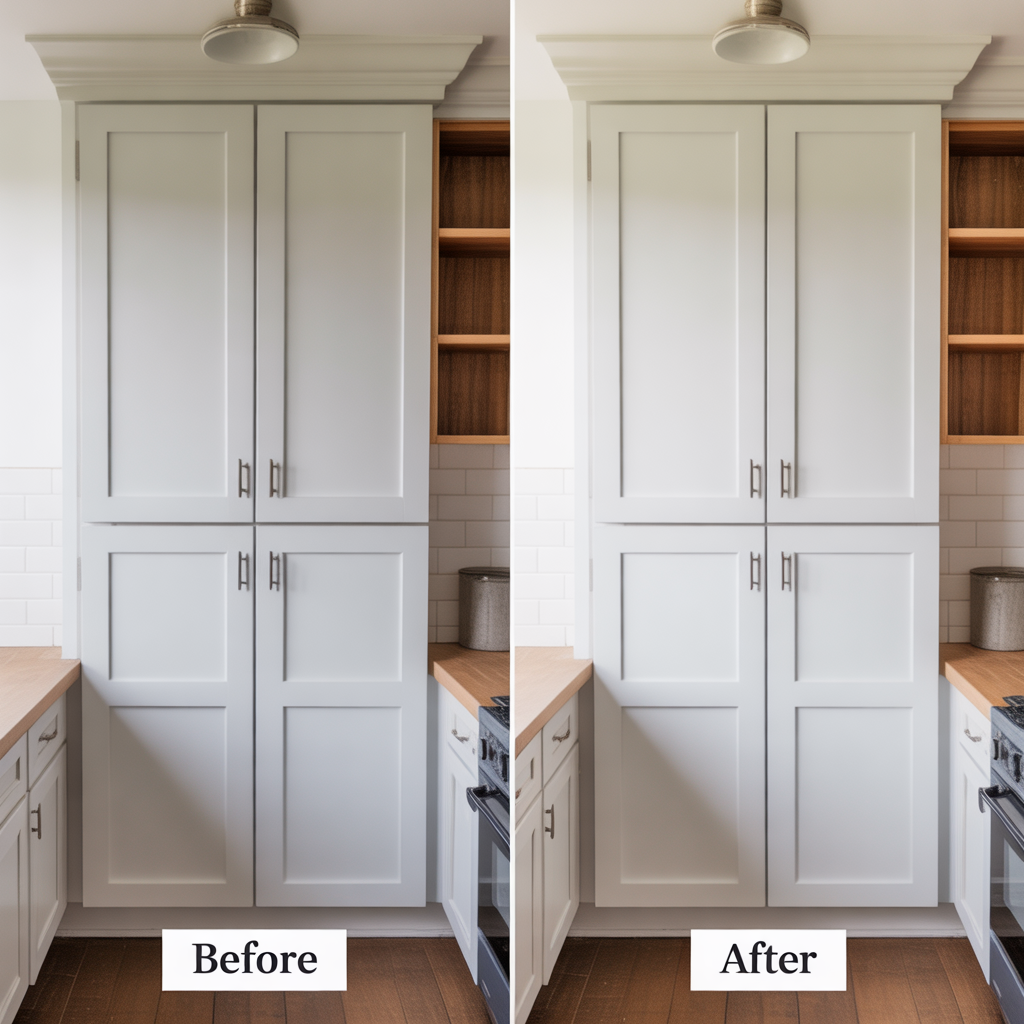
Open the problematic cabinet door and have a good look. Common issues include:
- Gap at the top or bottom – the door’s not sitting level
- Door not flush with the frame – it’s sticking out or pushed in too far
- Door rubbing on the frame – you can hear it scraping when you open/close it
- Uneven gaps between doors – one door’s higher or lower than its neighbour
Once you know what’s wrong, you’ll know which adjustment screw to turn.
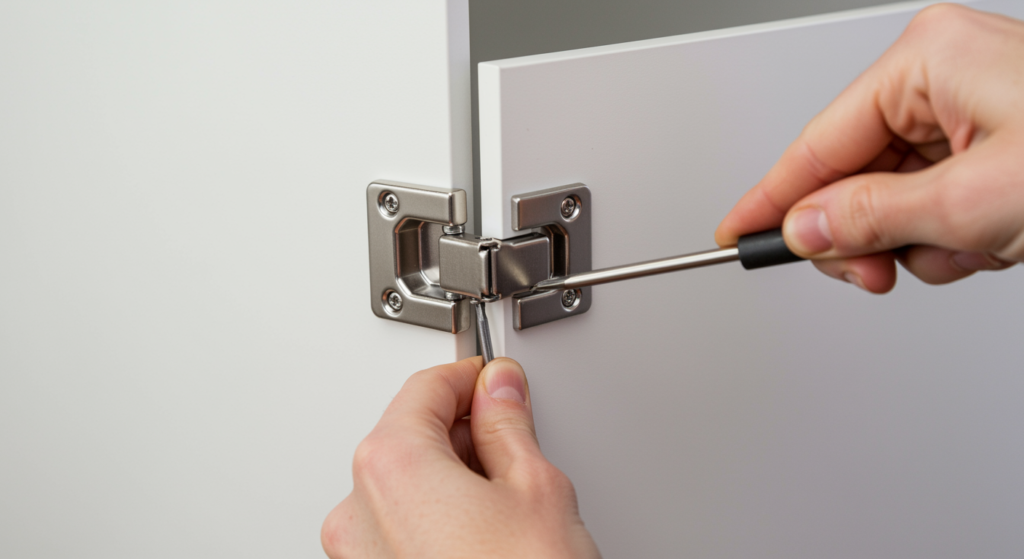
Step 2: Locate Your Adjustment Screws
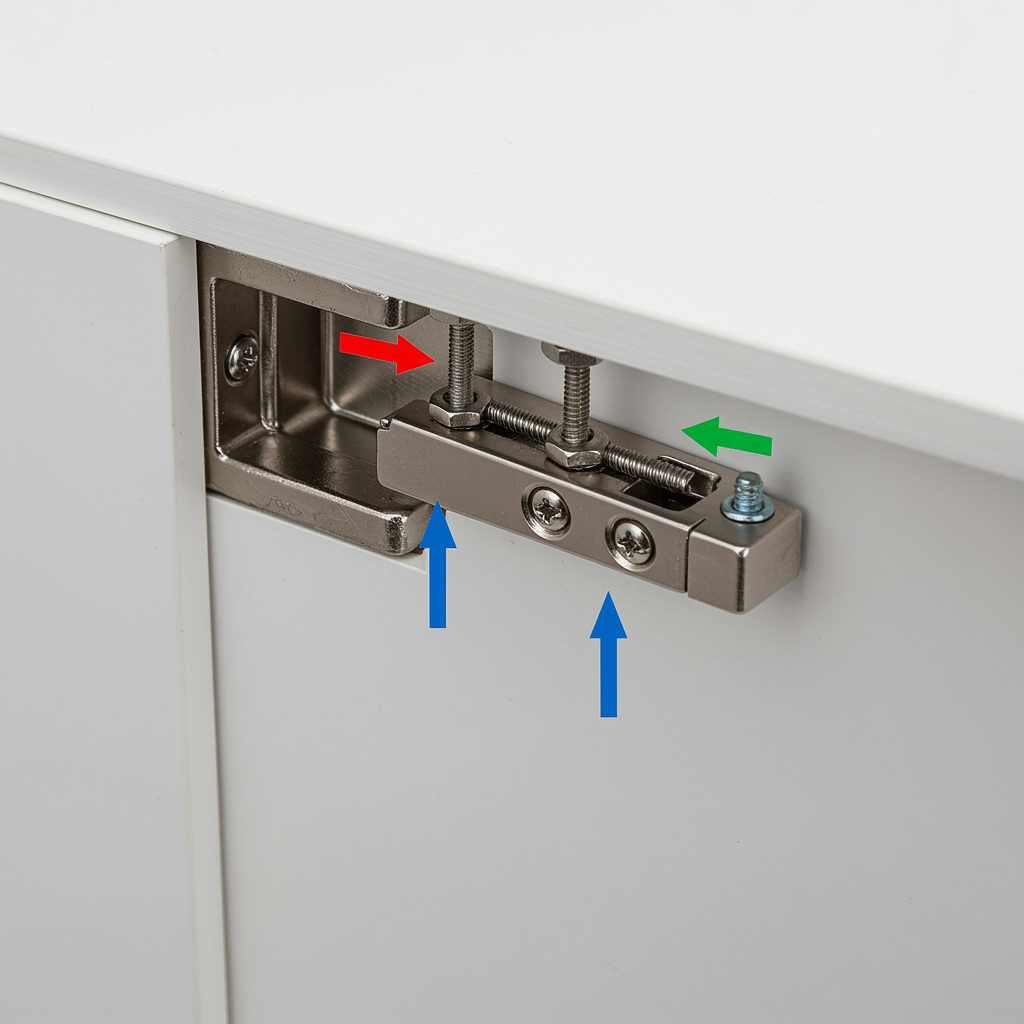
Open the cabinet door fully. You’ll see the hinge mounted on the inside of the door and attached to the cabinet frame.
Look for three screws on the hinge:
1. Front/Back Screw (Depth Adjustment) This is usually the screw closest to the front of the cabinet. Turning this moves the door in and out.
2. Side Screw (Side-to-Side Adjustment) This screw moves the door left or right. It’s typically in the middle or on the mounting plate attached to the cabinet frame.
3. Up/Down Screw (Height Adjustment) This adjusts the height of the door. On most hinges, you’ll find this on the mounting plate as well, or you might need to loosen the hinge screws slightly to slide the door up or down.
Step 3: Make Your Adjustments
To Fix Gaps at Top or Bottom (Height Adjustment):
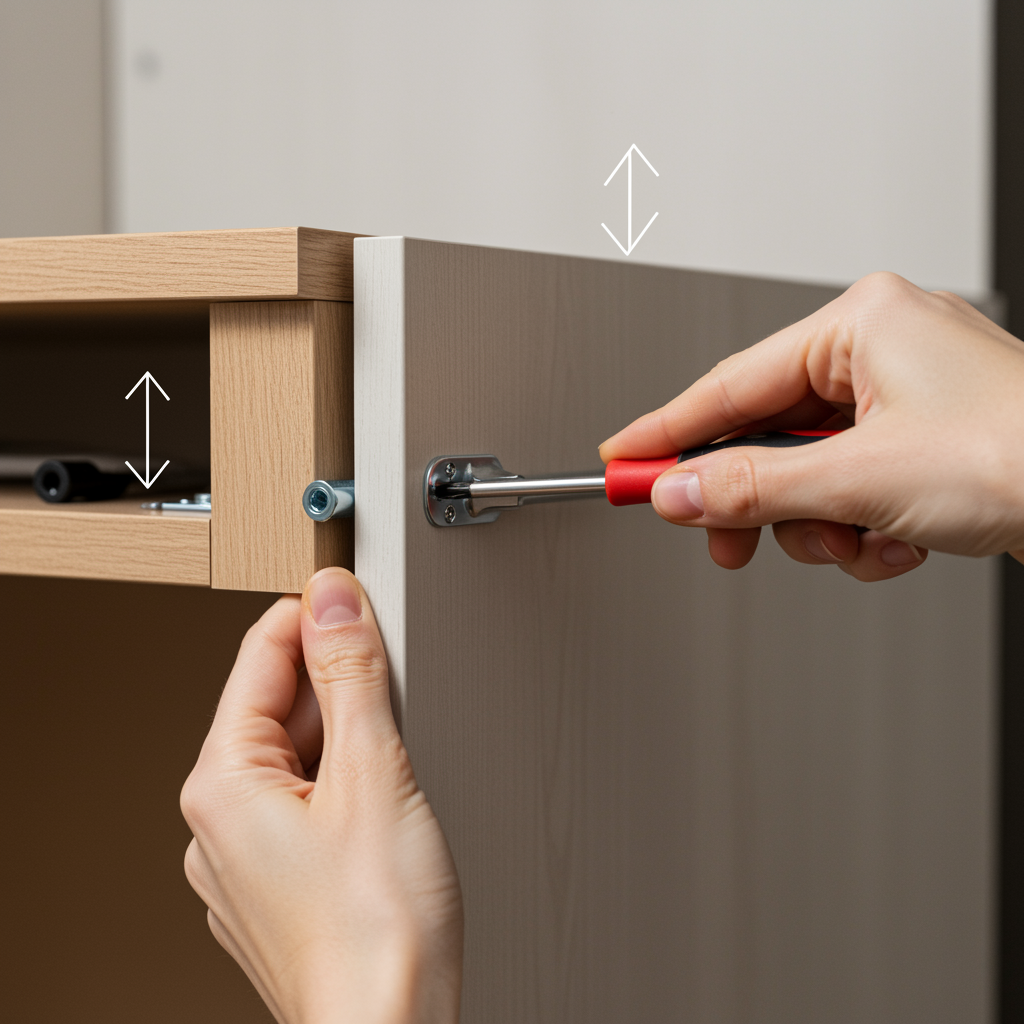
- Loosen the screws holding the mounting plate to the cabinet frame slightly
- Slide the door up or down until it’s level
- Tighten the screws back up
- Check the gap is even
To Fix Doors Sticking Out or Pushed In (Depth Adjustment):
- Turn the front screw clockwise to pull the door closer to the cabinet
- Turn it counter-clockwise to push the door out
- Make small adjustments (quarter turns) and check as you go
To Fix Side-to-Side Alignment:
- Turn the side adjustment screw to move the door left or right
- This is perfect for making sure the gap between two doors is even
- Again, small adjustments work best
Step 4: Test and Fine-Tune
Close the door and check your work. Does it look right? Does it close smoothly without rubbing?
If it’s still not perfect, don’t stress. Just open it back up and make tiny adjustments until you’re happy. It’s not an exact science, and sometimes you need to fiddle with two or three adjustment points to get it spot on.
How to Adjust Soft Close Hinges on Kitchen Cabinets
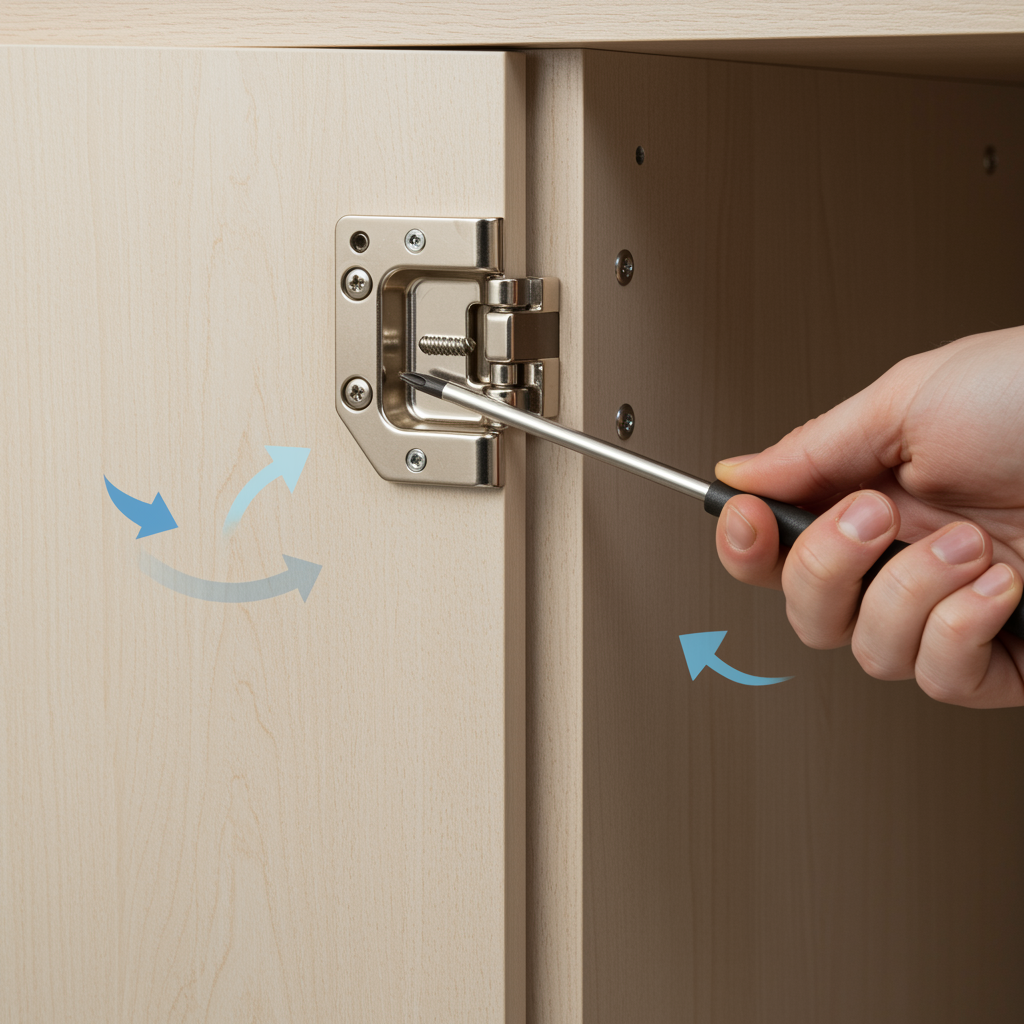
Soft-close hinges work the same way as regular hinges when it comes to alignment adjustments. The soft-close mechanism is built into the hinge, but the adjustment screws are in the same spots.
However, if your soft-close mechanism itself isn’t working properly (the door’s slamming instead of closing gently), that’s a different issue. Most soft-close hinges have a small adjustment dial or screw that controls the closing speed. You’ll usually find this on the hinge arm.
To adjust the soft-close speed:
- Look for a small dial or screw (often marked with + and – symbols)
- Turn it slightly to increase or decrease the closing speed
- Test the door and adjust until it closes at the speed you want
If the soft-close has completely stopped working, the mechanism might be worn out, and you’ll need to replace the hinge.
How to Adjust Blum Kitchen Cabinet Hinges
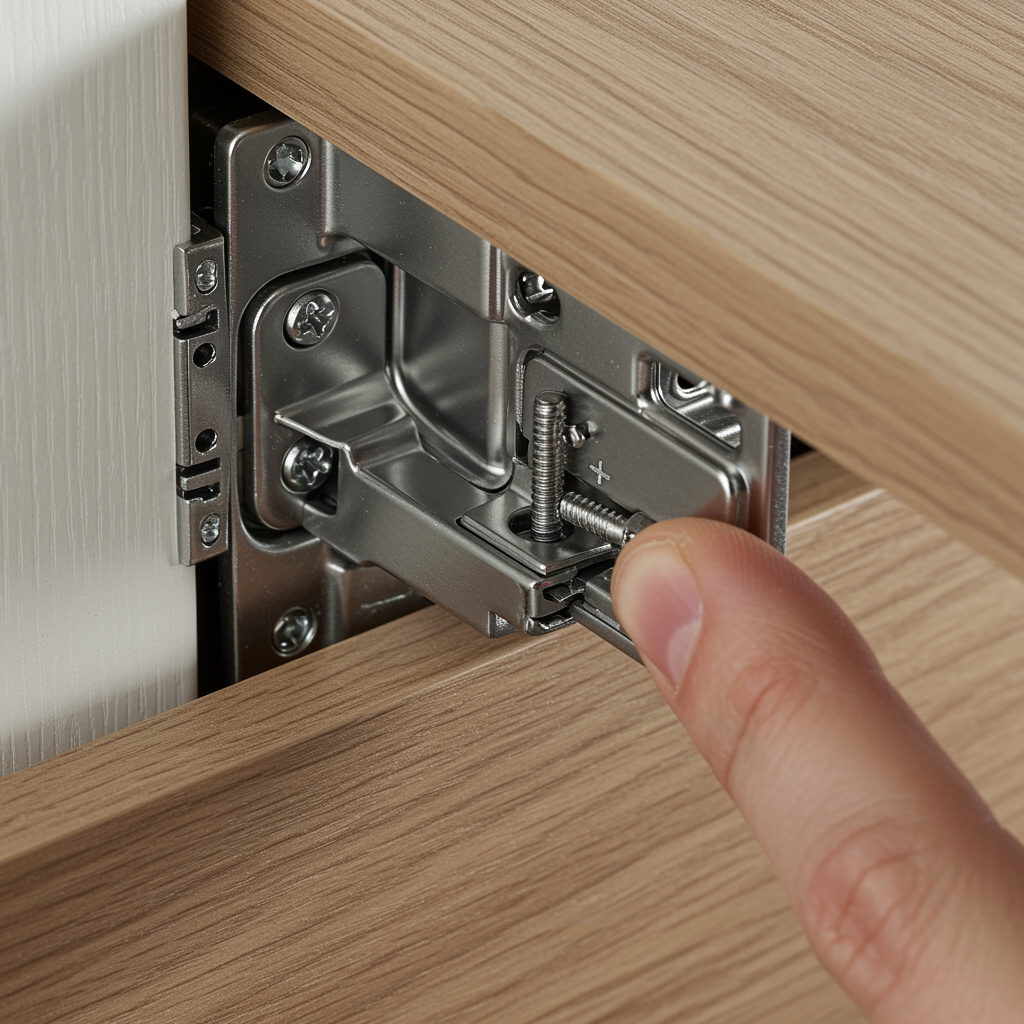
Blum hinges are top-quality and super popular in Australian kitchens. The good news is they follow the same three-point adjustment system we’ve covered.
Blum’s “Clip Top” hinges are particularly easy to work with because:
- They clip on and off the mounting plate (handy if you need to remove doors)
- The adjustment screws are clearly marked
- They’ve got built-in dampening on most models
The side-to-side adjustment on Blum hinges is often a screw with an eccentric cam system. You’ll turn the screw, and the door will shift sideways. Just remember: small turns make a big difference.
How to Adjust Corner Kitchen Cabinet Hinges
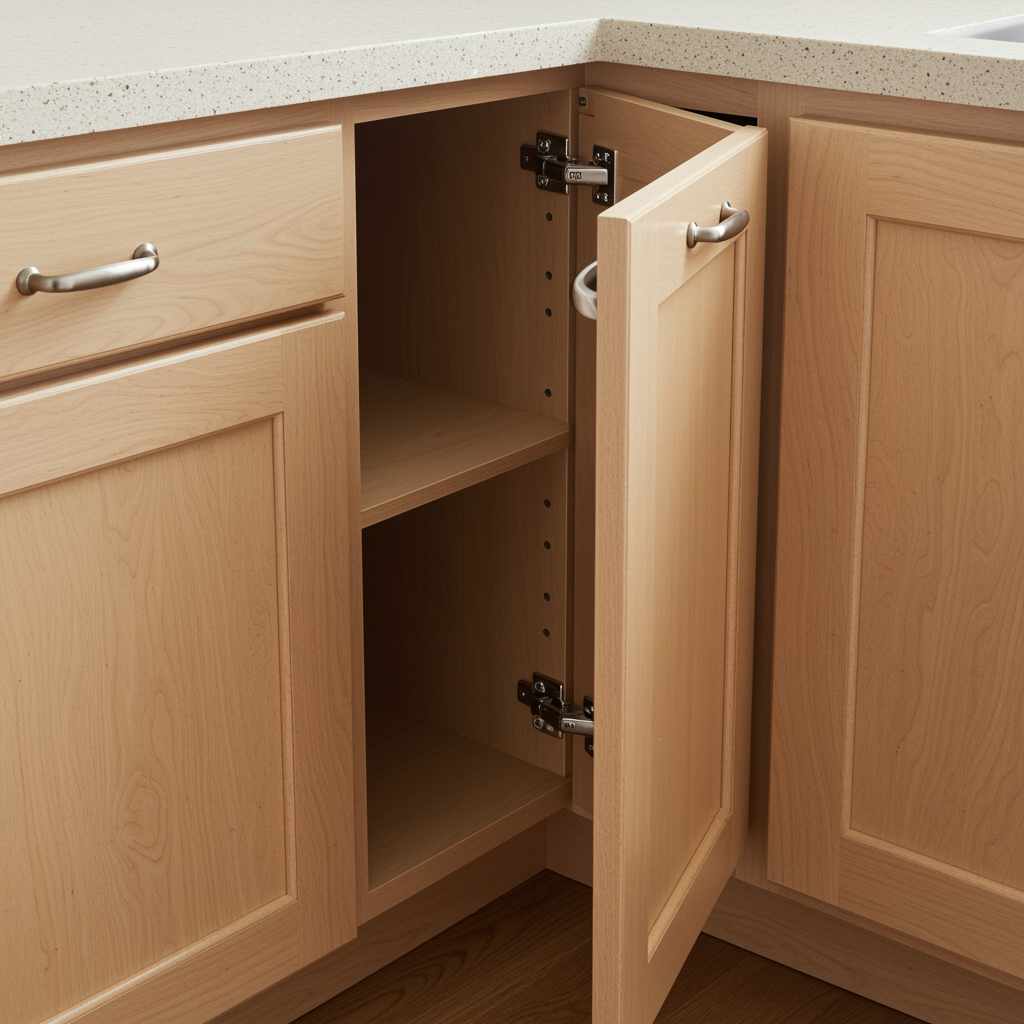
Corner cabinets can be a bit trickier because you’re often dealing with bi-fold doors or doors that swing out at an angle. The hinges might look different too.
For corner cabinet hinges:
- The adjustment principles are the same, but you might have less room to work with
- You may need to adjust both hinges on a bi-fold door to get them aligned
- Take your time and check both doors are working together smoothly
If you’ve got lazy susan corner cabinets, the doors usually swing out further, so make sure there’s enough clearance and the doors aren’t hitting each other when you adjust them.
Common Problems and Quick Fixes

Door Won’t Stay Closed
This usually means the door’s misaligned and not catching the latch properly. Adjust the depth (in/out) until the door sits flush with the frame and engages the catch.
Door Sagging Over Time
This happens, especially on heavier doors or older cabinets. Tighten all the hinge screws first (they can loosen over time). If that doesn’t work, you might need to adjust the height or even replace worn-out hinges.
Gaps Between Doors Aren’t Even
Use the side-to-side adjustment to shift one or both doors until the gaps are consistent. This is purely cosmetic but makes your kitchen look much neater.
Door Rubbing on the Frame
Adjust the depth to pull the door away from the frame slightly. If it’s rubbing at the top or bottom, you might also need a height adjustment.
When to Replace Rather Than Adjust
Sometimes, no amount of adjusting will fix the problem. You might need new hinges if:
- The hinge is visibly damaged or bent
- Screws keep loosening no matter how tight you make them
- The soft-close mechanism is completely worn out
- The adjustment screws are stripped and won’t turn
Replacing kitchen cabinet hinges isn’t difficult, and we’ve got a separate guide on that if you need it.
Tips for Keeping Your Hinges in Good Nick
- Don’t overtighten screws – you can strip them or crack the cabinet material
- Check hinges every year or so – a quick tighten can prevent bigger problems
- Clean hinges occasionally – grease and gunk can affect how smoothly they work
- Don’t slam cabinet doors – even soft-close hinges wear out faster with rough treatment
Frequently Asked Questions
How long does it take to adjust kitchen cabinet hinges?
Usually about 5 minutes per door once you know what you’re doing. Your first one might take 10-15 minutes while you figure out which screws do what.
Do I need to remove the cabinet doors to adjust them?
Nope! One of the best things about modern concealed hinges is you can adjust them while the door’s still attached.
Can I adjust kitchen cabinet hinges myself, or do I need a professional?
You can definitely do this yourself. It’s one of the easiest DIY jobs in the kitchen. Save your money for the tradies when you really need them.
Why do my cabinet doors keep going out of alignment?
Usually because the screws have loosened over time, or the cabinet itself has shifted slightly (houses settle, especially newer ones). Regular tightening helps prevent this.
Will adjusting hinges damage my cabinets?
Not if you’re careful. Just don’t overtighten screws, and make small adjustments rather than big ones.
Conclusion
And there you have it! Adjusting kitchen cabinet hinges is one of those jobs that looks harder than it actually is. With just a screwdriver and a few minutes, you can fix wonky doors, uneven gaps, and all sorts of alignment issues.
The key is to make small adjustments and check your work as you go. Don’t try to fix everything in one big turn of the screw. Quarter turns, mate. Quarter turns.
Now your cabinet doors should be sitting perfectly flush, closing smoothly, and looking good as new. And if something goes wrong down the track? You now know exactly how to sort it out yourself.